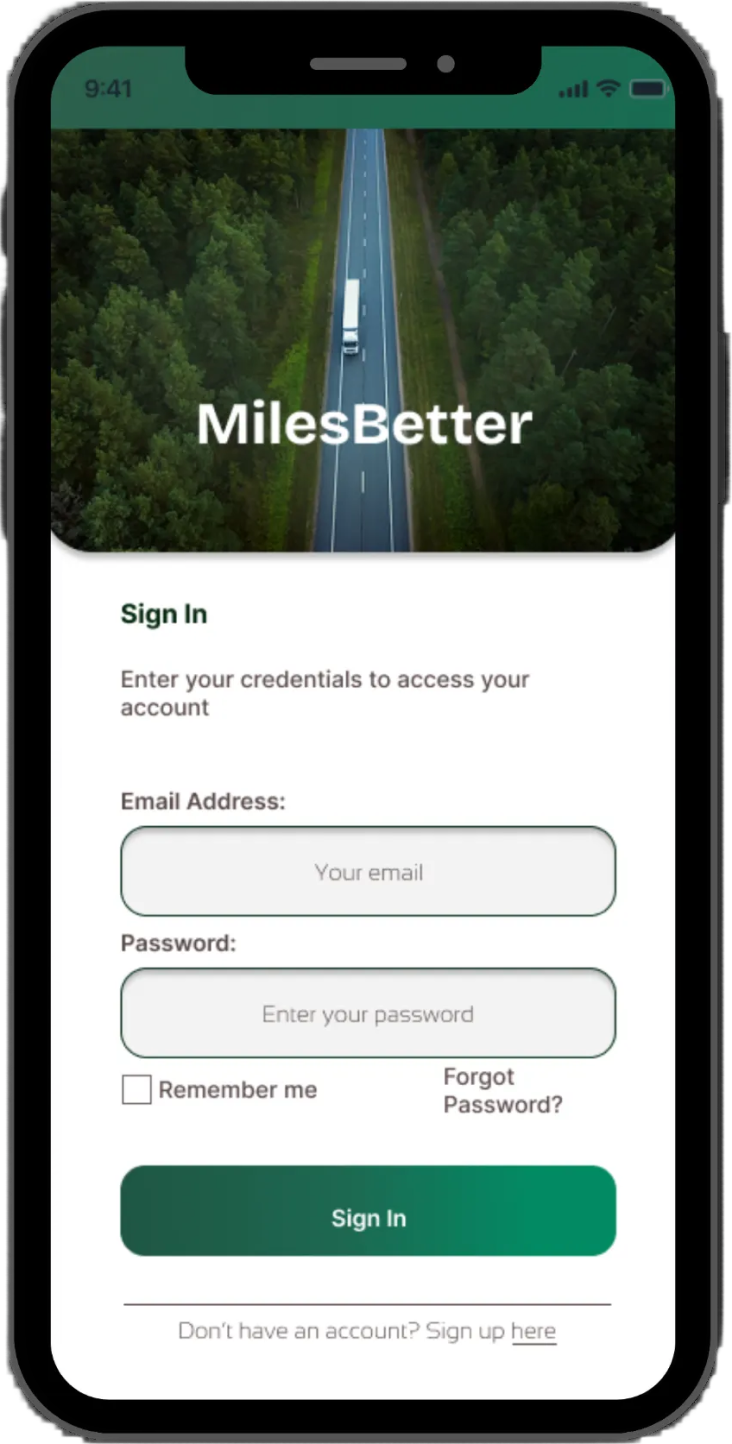
MilesBetter
A wellness app for HGV drivers, designed to help improve fitness, nutrition and mental health whilst on the road.
01. Project Overview
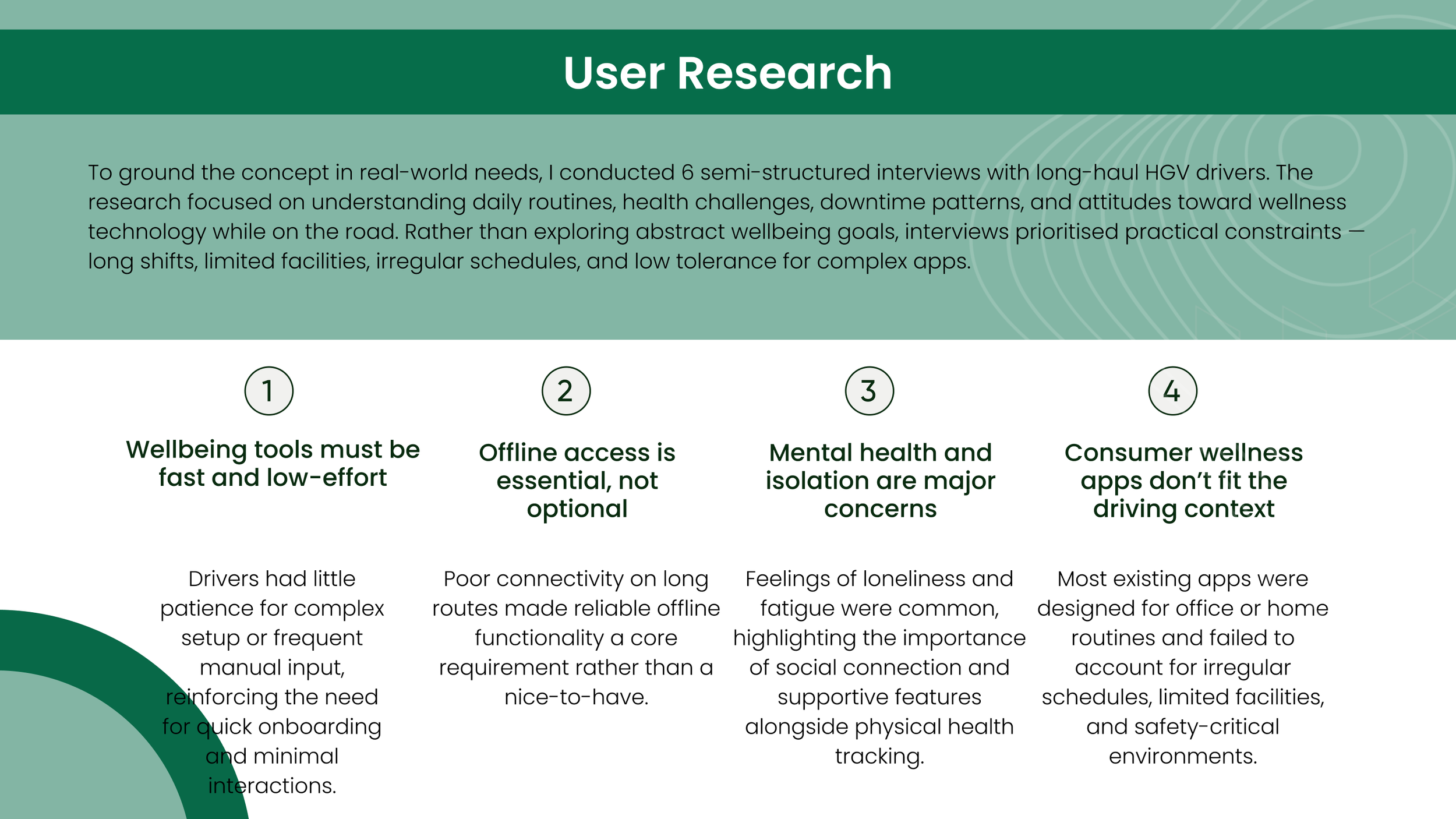
HGV drivers face unique health challenges that most consumer wellness apps fail to address. MilesBetter explores how a simple, accessible, and offline-friendly experience could support drivers’ mental health, physical activity, and nutrition without adding friction to their daily routine.
Role:
End to end design of the app
Team:
Solo project
Figma, Procreate, Photoshop, Illustrator
Tools:
02. Problem and Goal
Problem:
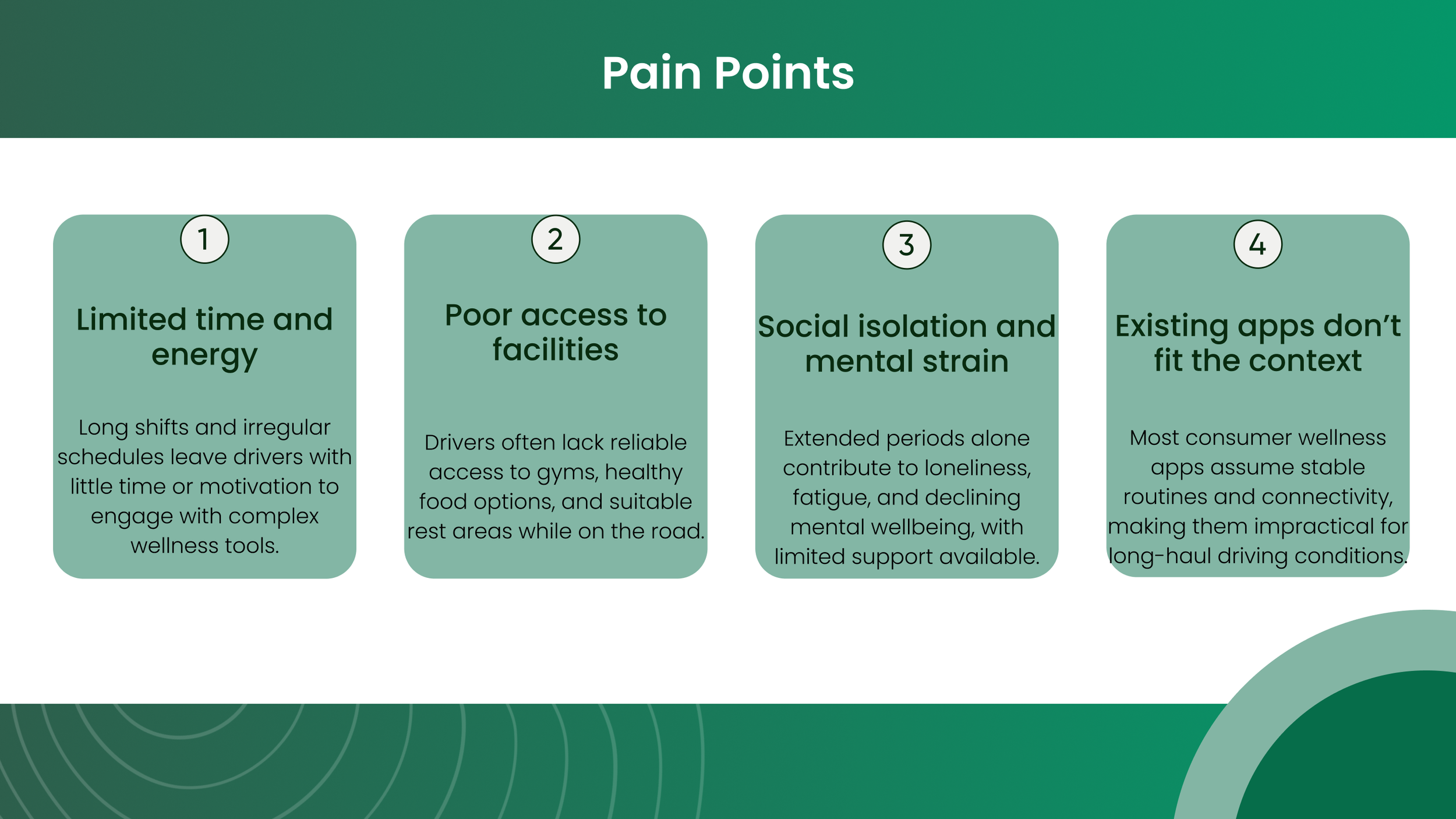
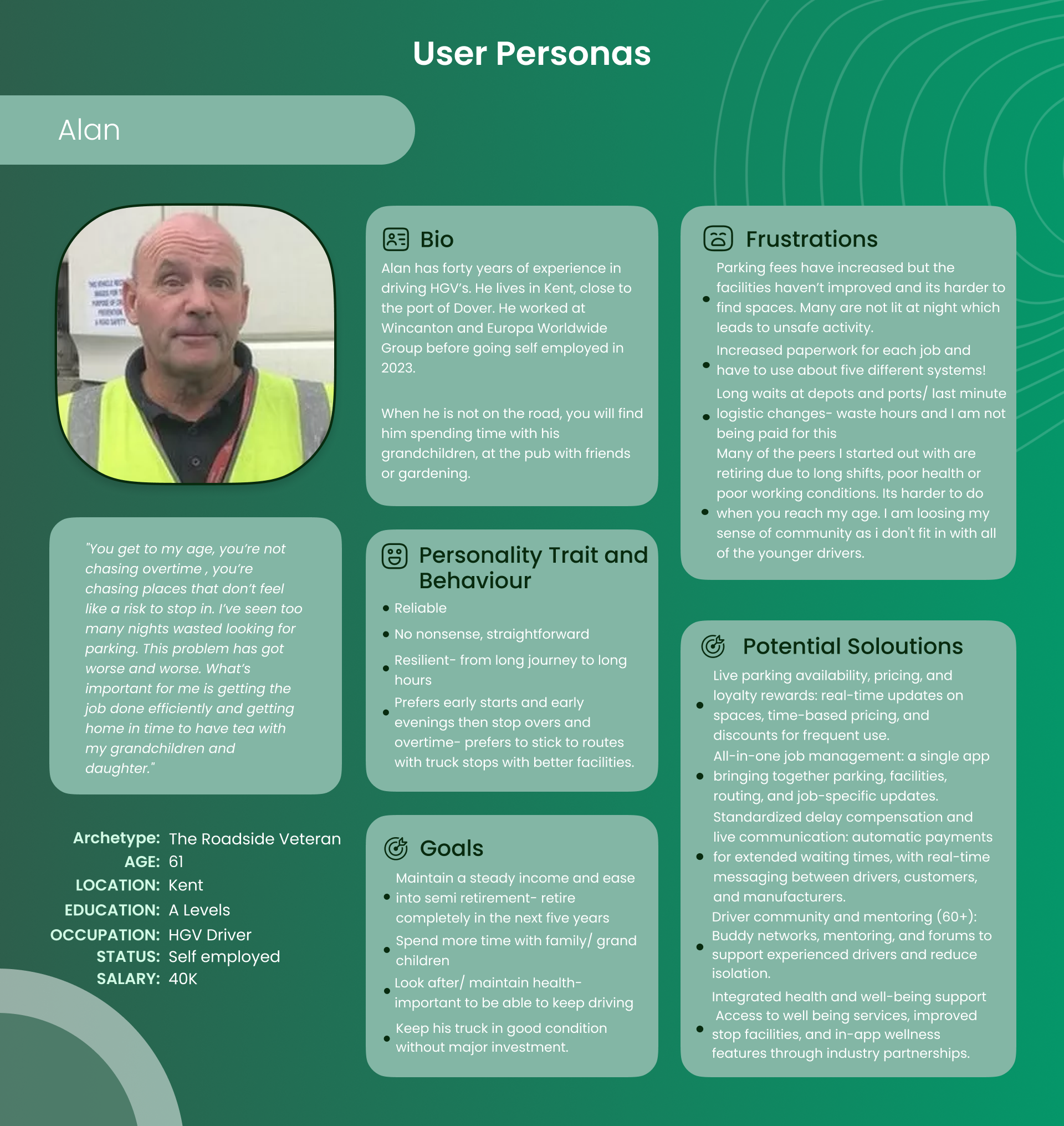
HGV drivers experience long, sedentary working hours, limited access to healthy food and fitness facilities, and social isolation. Most existing wellness apps are not designed for on-the-road use, making them impractical, overly complex, or inaccessible during long shifts.
Goals:
To design a simple, driver-first wellness app that fits into the realities of long-haul driving — supporting mental health, fitness, and nutrition with minimal friction, whether drivers are online or offline.
Key goals included:
Fast, low-effort onboarding via voice or text
A clear wellness dashboard for fitness and nutrition insights
Social connection through a buddy network
Reliable offline support for drivers on the move
03.Core challenges and Soloutions
Health & Well-Being is Hard to Maintain on the Road
Challenge
HGV drivers spend long hours sedentary, with irregular access to healthy food, exercise, or mental wellness support — contributing to fatigue and poor lifestyle outcomes.
Solution
Designed a holistic wellness framework tailored to life on the road, integrating tailored fitness prompts, nutrition guidance, mood tracking, and micro-break routines that fit into unpredictable schedules.
Existing Wellness Tools Don’t Fit Mobile Work Rhythms
Challenge
Generic wellness apps often assume daily routines or gym access — which don’t align with drivers whose schedules are irregular and location-variable.
Solution
Created bite-sized interactions and flexible logging that can be completed in short intervals without requiring continuous connectivity or fixed routines.
Drivers Lack Motivation from Static Goals
Challenge
Traditional apps rely on generic habit loops that fail to motivate sustained use — especially for users whose wellness isn’t tied to structured environments.
Solution
Built dynamic milestone systems and contextual nudges that reward incremental wins (e.g., hydration streaks, short walks, breathing breaks), helping drivers feel progress even in small daily increments.
Wellness Must Feel Practical, Not Penalty-Driven
Challenge
Users disengage when apps emphasise deficits (e.g., “You’re behind on goals”), especially when life circumstances make consistent performance unrealistic.
Solution
Crafted a supportive tone and feedback system focused on encouragement, resilience, and choice — celebrating participation rather than penalising inconsistency.
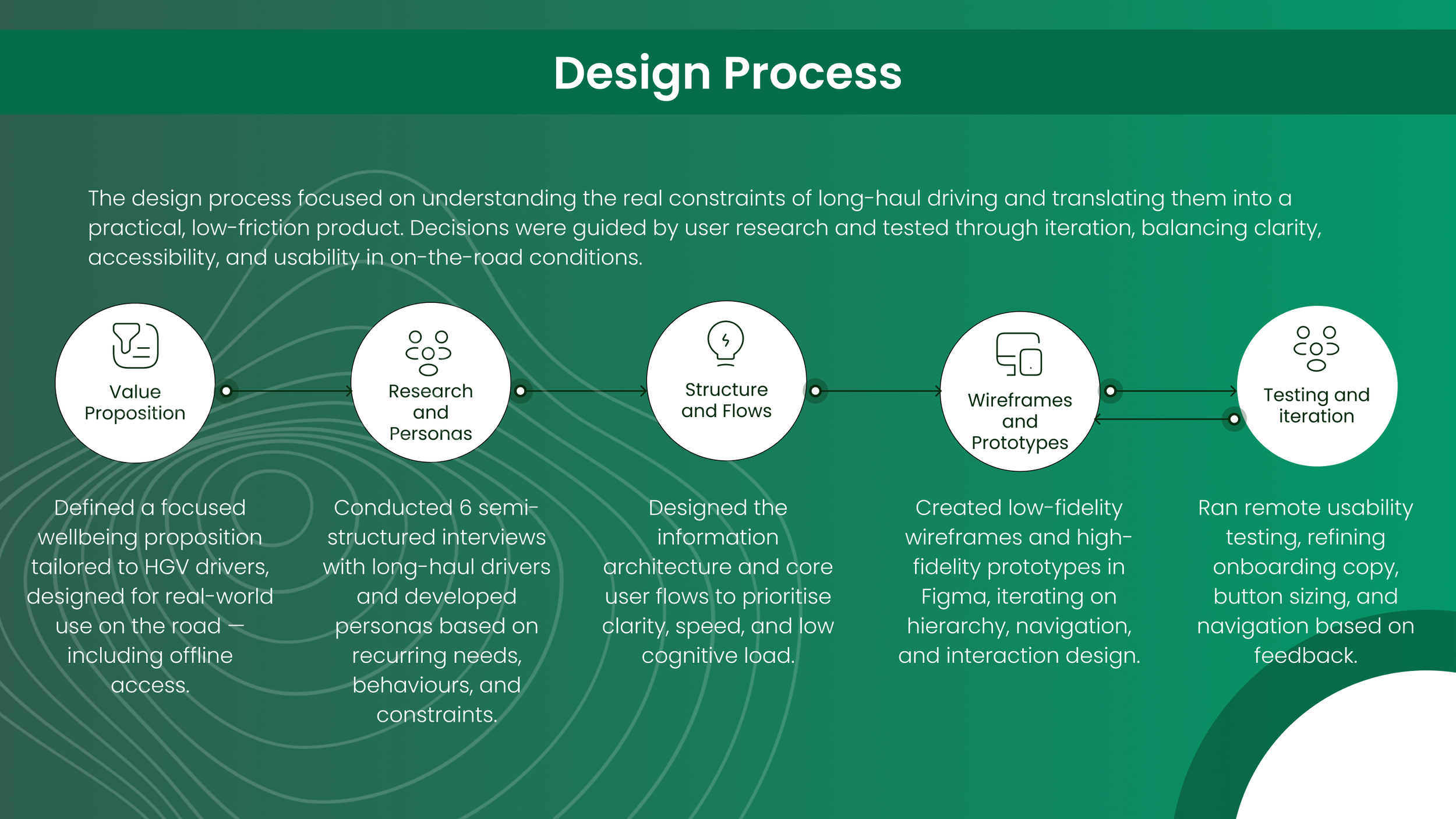
04. Process
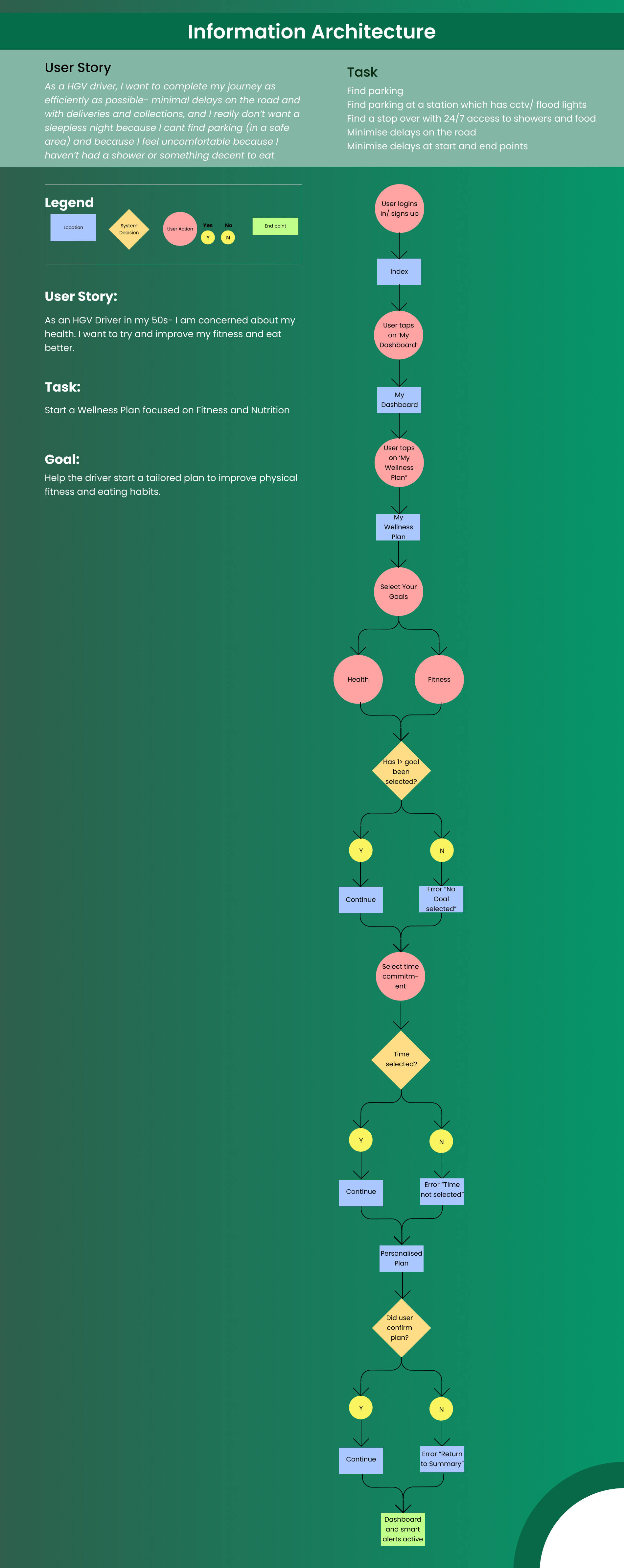
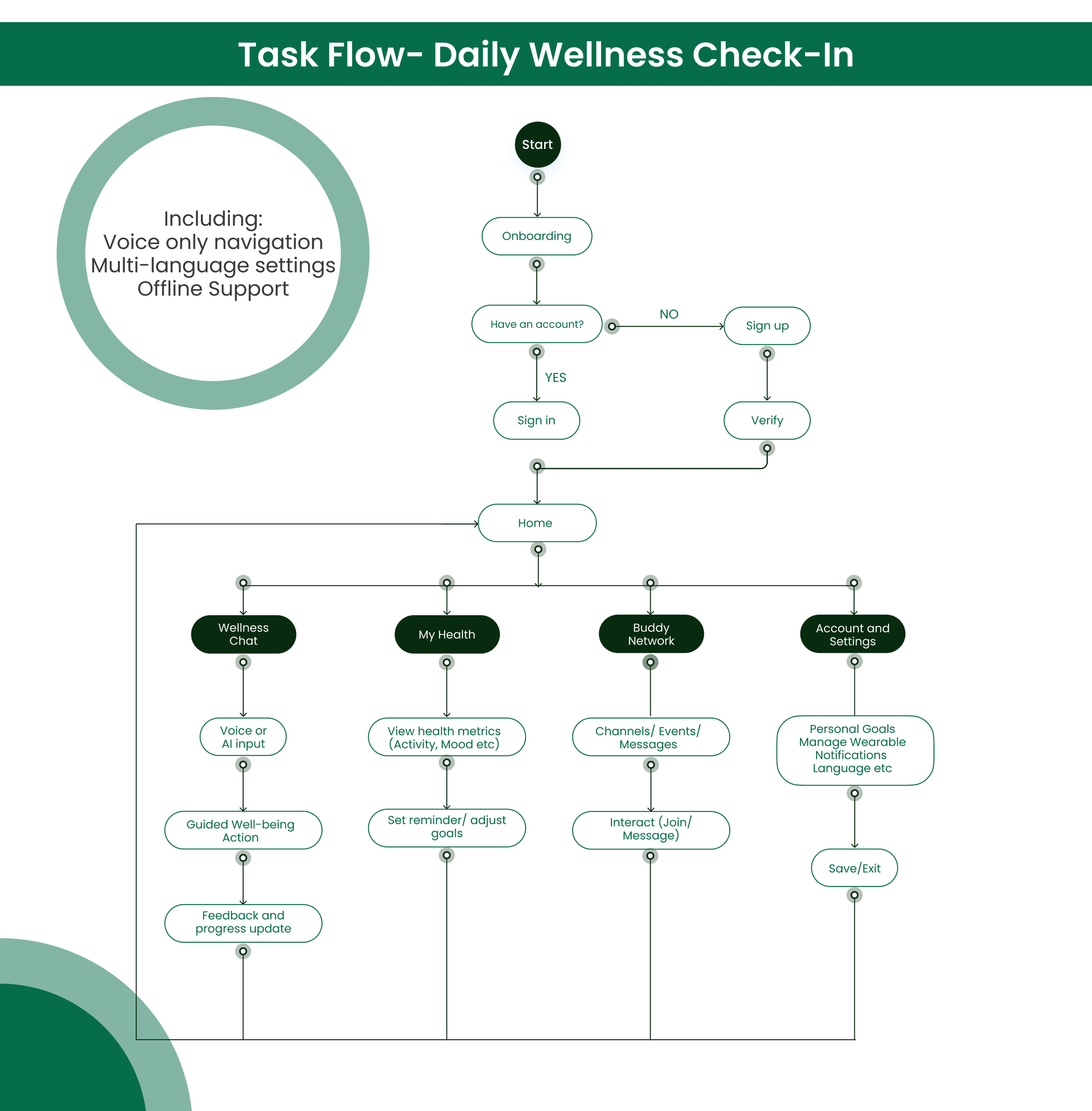
Information architecture mapping
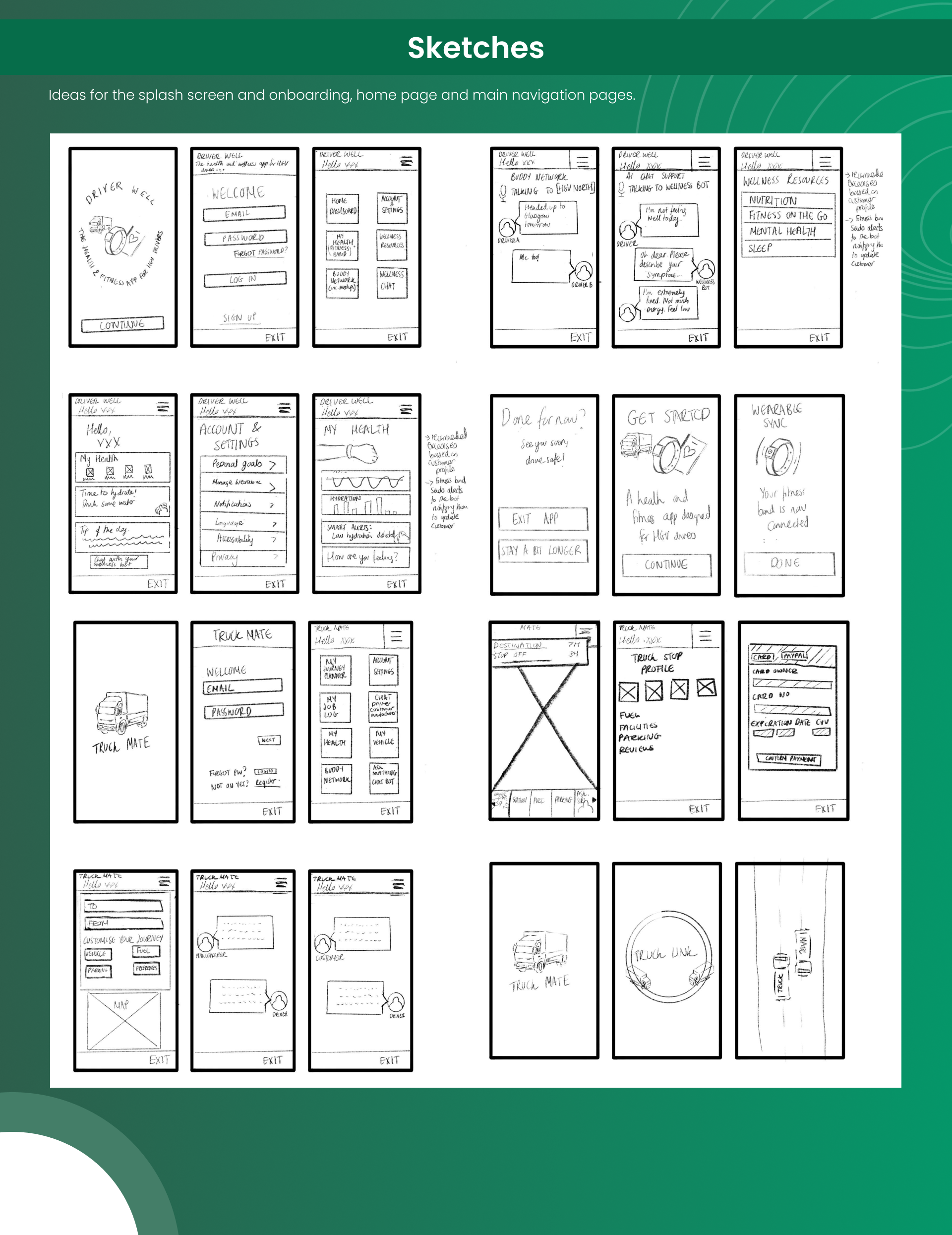
Wireframing & iteration
Safeguarding integration
Visual system & UI refinement
05. Impact
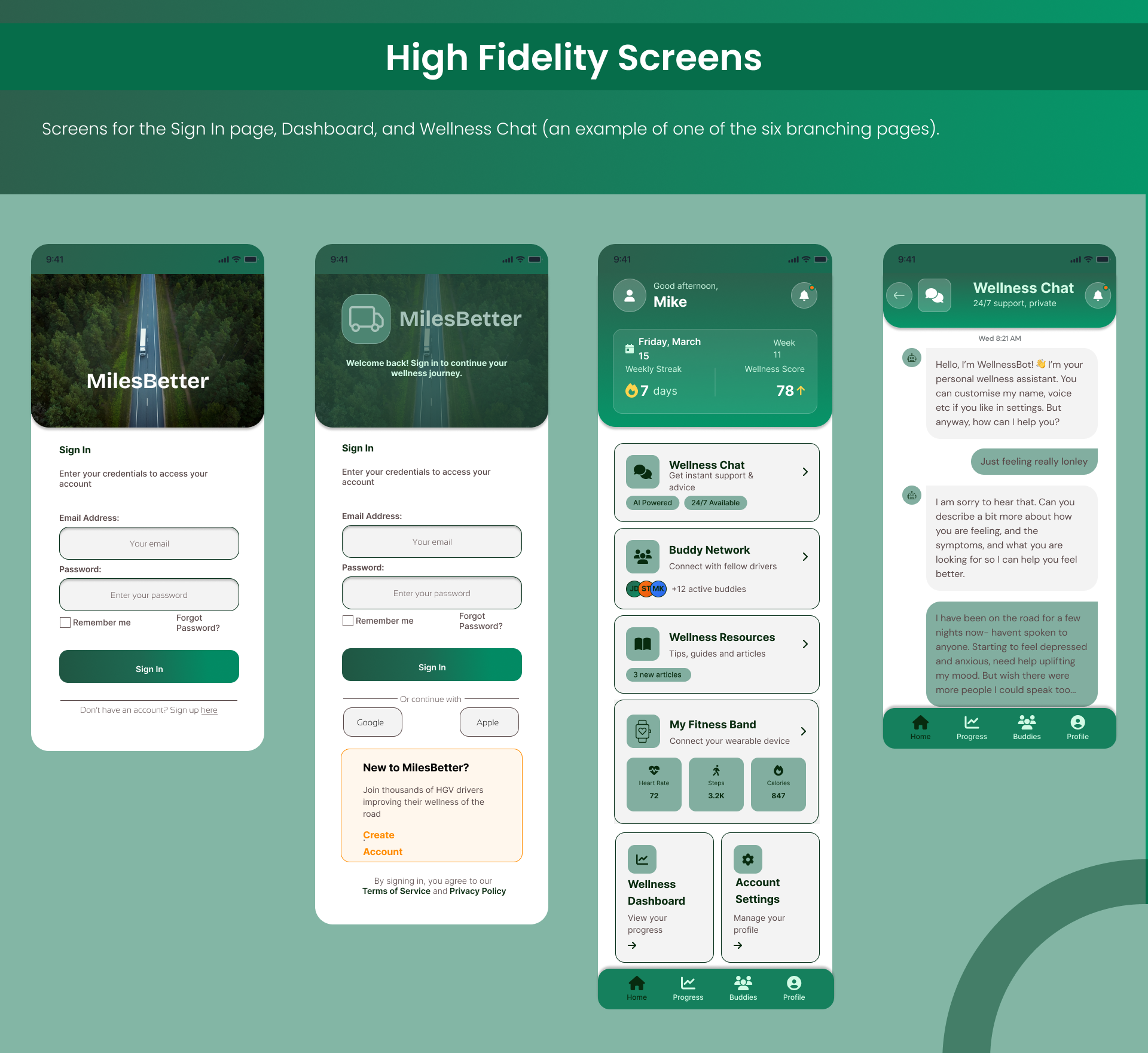
Core product flows.
06. Learnings
Designing for low tech-confidence requires radical simplicity.
Many HGV drivers are not early adopters of wellness apps. Navigation, language, and onboarding needed to be stripped back and practical rather than aspirational or trend-led.
Context shapes usability more than aesthetics.
Drivers operate in high-pressure, time-constrained environments. Features had to work during short breaks, in poor signal conditions, and without cognitive overload.All-in-one solutions risk becoming overwhelming.
Combining fitness, nutrition, mental health, parking, and route-based tools revealed the tension between utility and simplicity. Prioritisation and progressive disclosure became critical design strategies.Wearable integration must justify its friction.
Syncing with devices like Fitbit introduces setup complexity. Integration only adds value if the feedback is actionable and relevant to a driver’s daily routine.Mental health design requires tone sensitivity.
There is stigma around men’s mental health, particularly in transport industries. Language, UI tone, and feature framing needed to feel supportive and practical — not clinical or patronising.Designing for the road means designing for unpredictability.
Limited parking, irregular meals, and shifting schedules make rigid goal systems ineffective. Flexibility and encouragement outperformed strict habit tracking.