The Contractors
A wacky couch co-op game where players work as contractors employed by an estate agent.
The houses look perfect online — but behind the scenes, they’re falling apart. Hide, fix, and clean damage before the buyer arrives. Do the job well, and you help sell the house.
1–2 player local co-op. Fast. Chaotic. Unpredictable.
01. Project Overview
The Contractors was developed at the National Film and Television School as a 9-month production project.
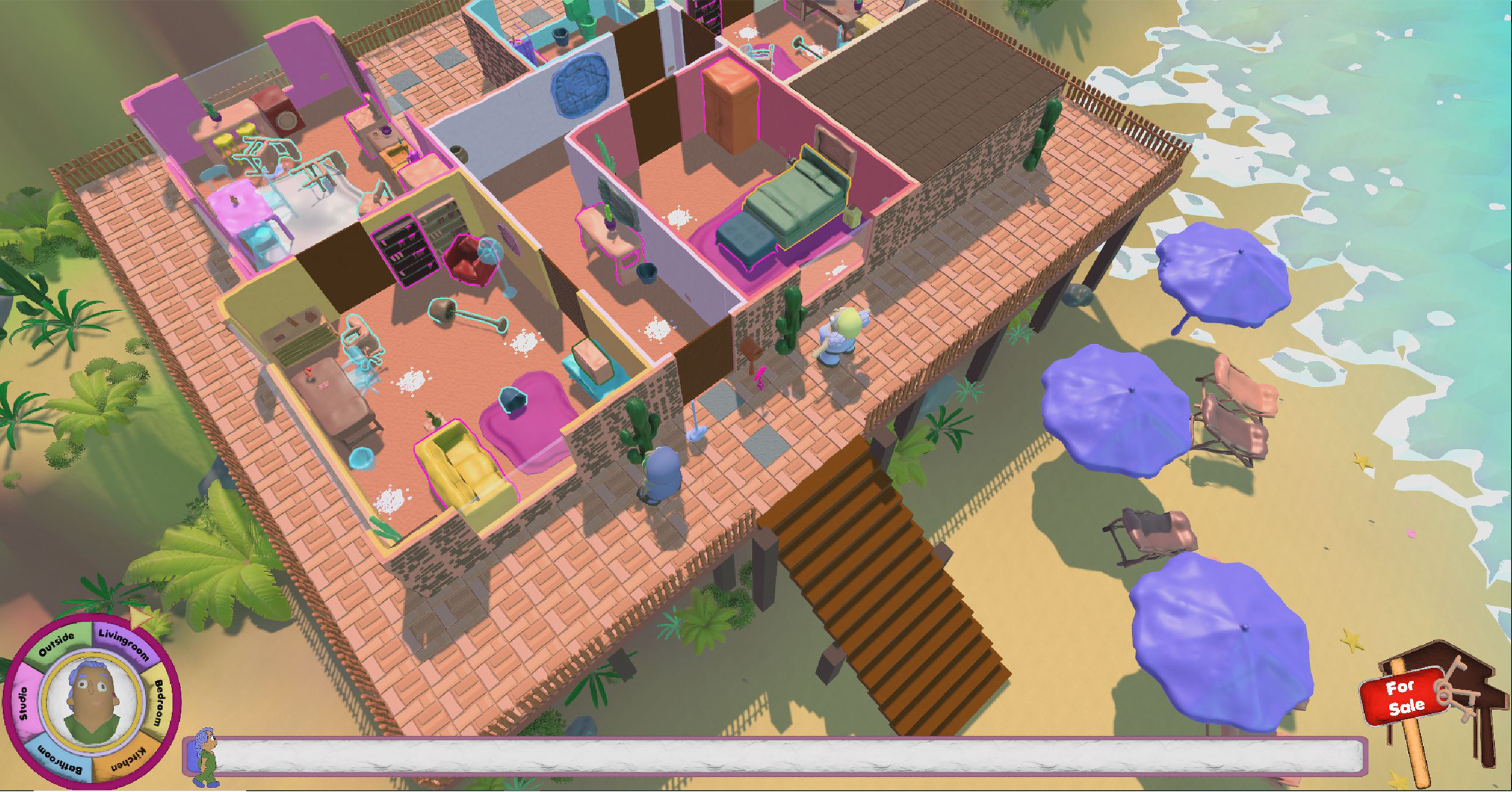
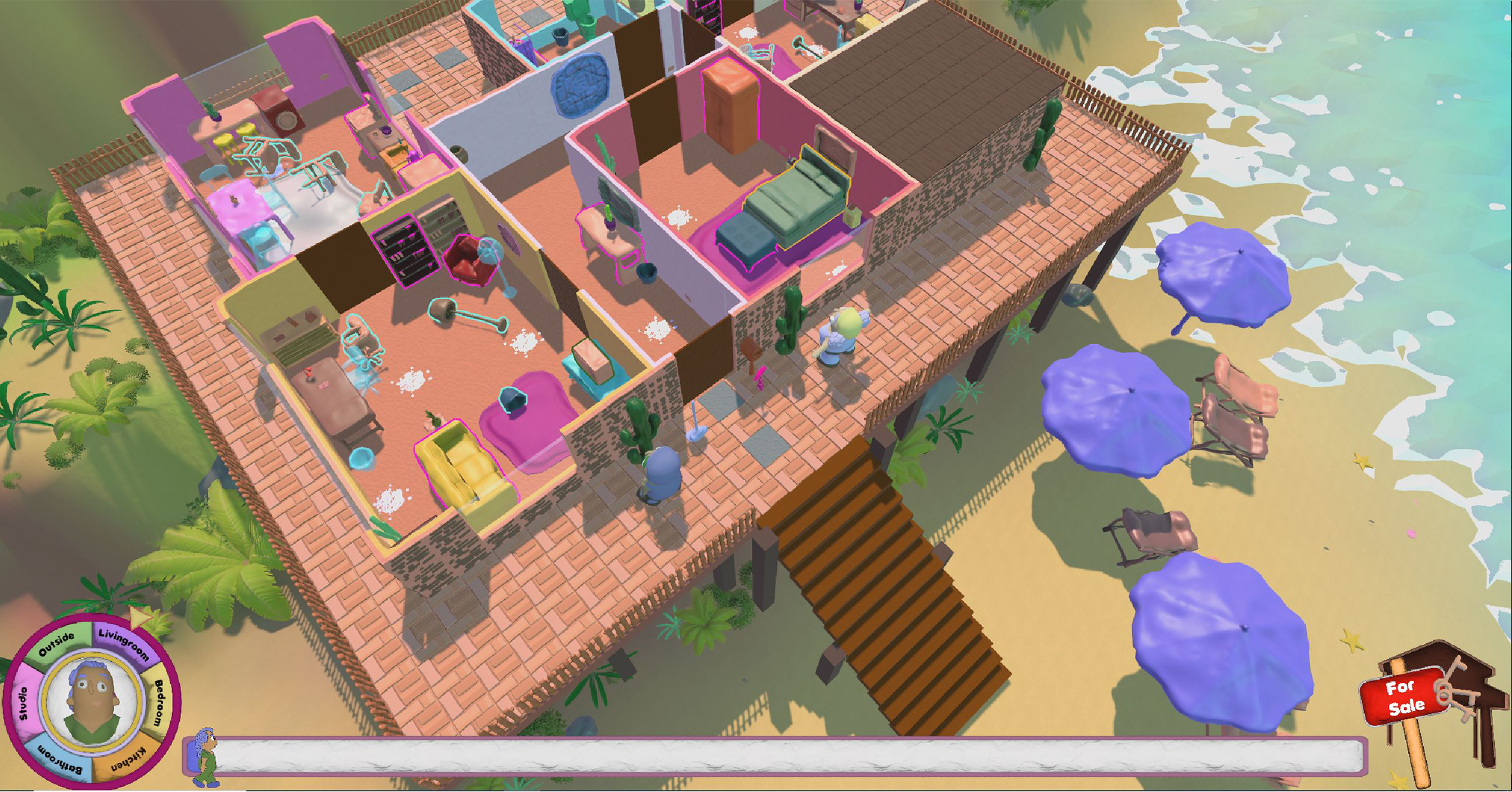
Players take on the role of chaotic contractors hired by an estate agent to discreetly repair properties during live viewings. As clients move through the house, environmental destruction unfolds in real time. Players must clean, repair, move furniture, and disguise damage before satisfaction drops.
I defined the visual identity, level systems, player feedback structure, and coordinated a 45-person multidisciplinary team to deliver an exhibition-ready build.
Role:
Art Direction, 3D Models and Concept Art, Game Design, UI/UX Design, Project Manager
Team:
45-person multidisciplinary team, National Film and Television School
Timeline:
9 months
Unity, Plastic SCM, Adobe Creative Cloud, Procreate, Maya, ZBrush, Reality Capture
Tools:
Platform:
PC (Exhibition build)
Recognition:
Exhibited at EGX and MCM, featured on BBC, CBBC and BFI. Secured publishing interest from Apple Arcade, Raw Fury and Mediatonic.
02. Art Direction and Game Design
The goal was to create a couch co-op experience with the frantic energy of games like Overcooked and Moving Out, and the stealth aspects of Neighbours from Hell and Monaco.
Key Pillars:
Coordination
Stealth
Adaptability
Primary Objective:
Sneak around the customer and fix all the damages and misplace items before the customer sees them.
Secondary Objective:
Prevent customer satisfaction from decreasing as much as possible.
Core Mechanics in every level:
Fixing
Picking Up
Hiding
Distracting
Tools
Additionally, each level introduces a unique mechanic tied to its setting (Beach House, Chicken Farm, Castle, Haunted House, Lighthouse).
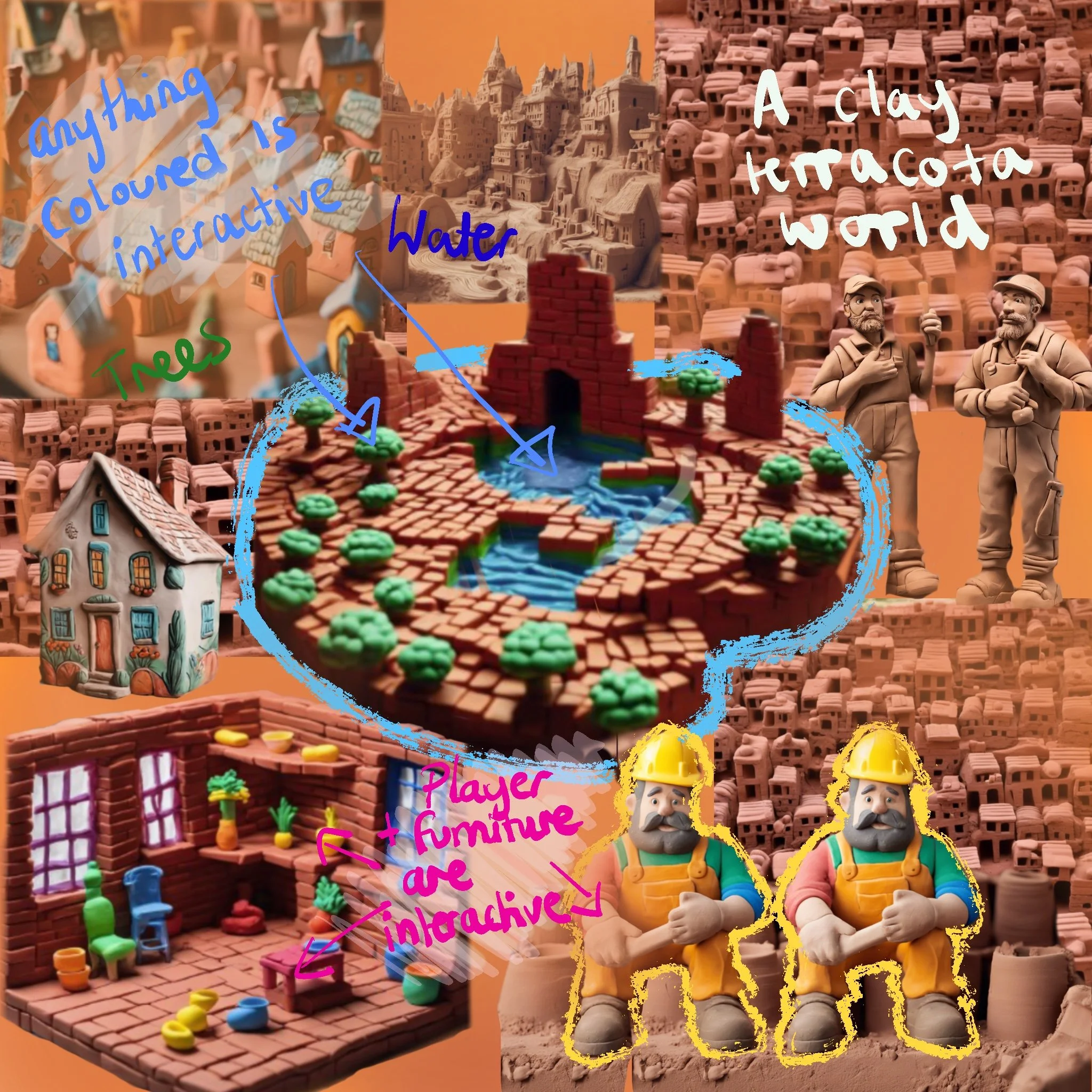
The tone needed to feel chaotic — without becoming visually overwhelming. We developed a colourful, clay-inspired aesthetic to soften the impact of destruction and reinforce the comedic tone. The handcrafted material quality made collapse and failure feel playful rather than punishing.
Visually, I focused on:
Strong silhouette readability
Clear material differentiation
High colour contrast for gameplay clarity
Distinct client personality themes per level
The art direction wasn’t just aesthetic — it supported pacing, emotional tone, and spatial readability.
03. The Core Challenges and Soloutions
The central challenge was clear: How do you design chaos that remains readable?
With repair states, destruction systems, VFX, timers, client mood indicators, and scoring active simultaneously — clarity became the foundation of every design decision.
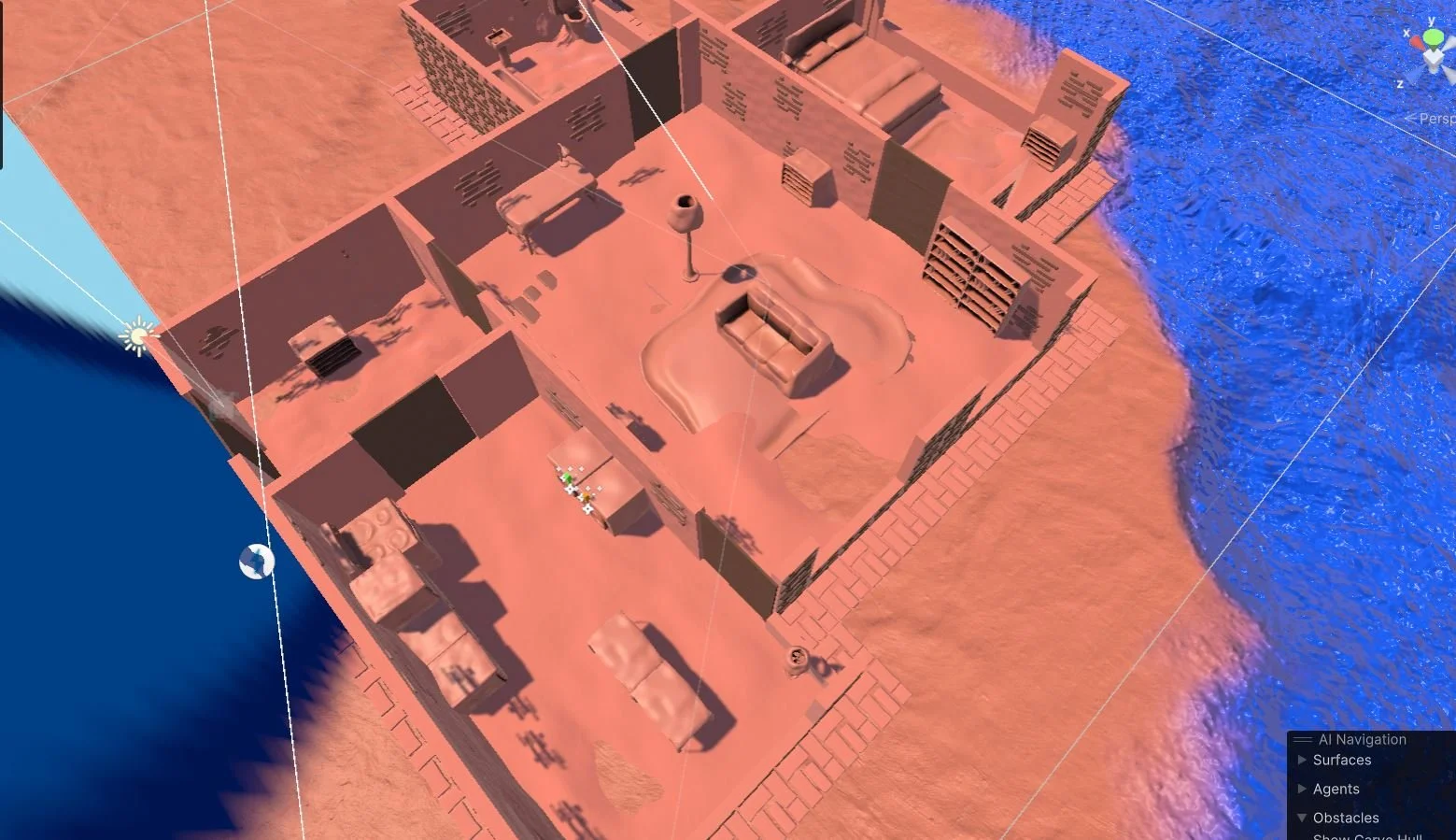
2. Shared-Screen Level Design Constraints
Problem
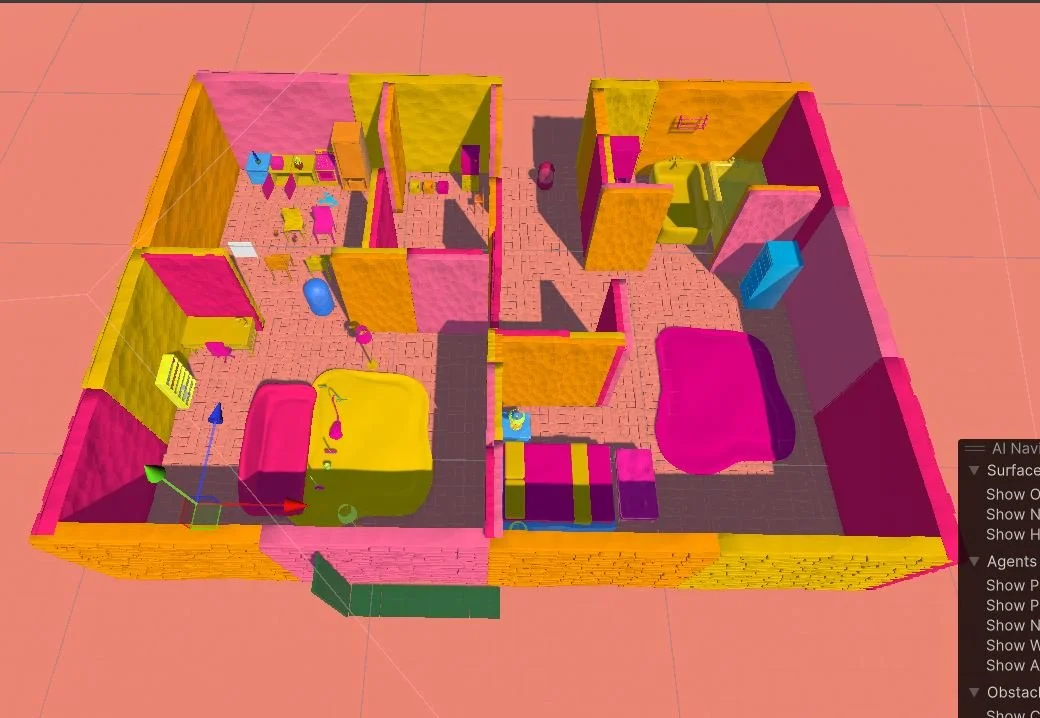
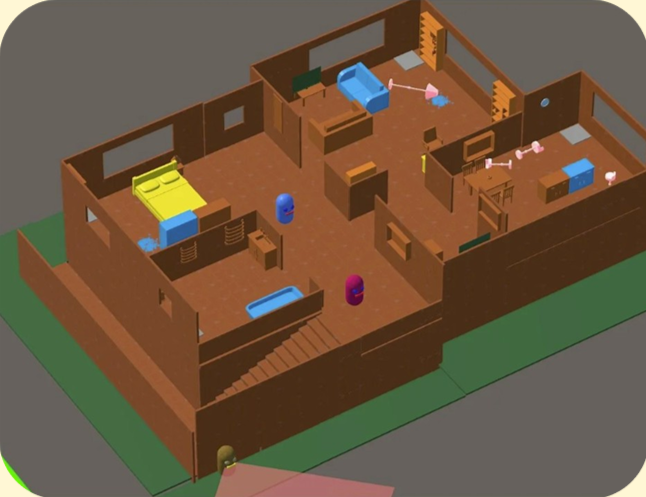
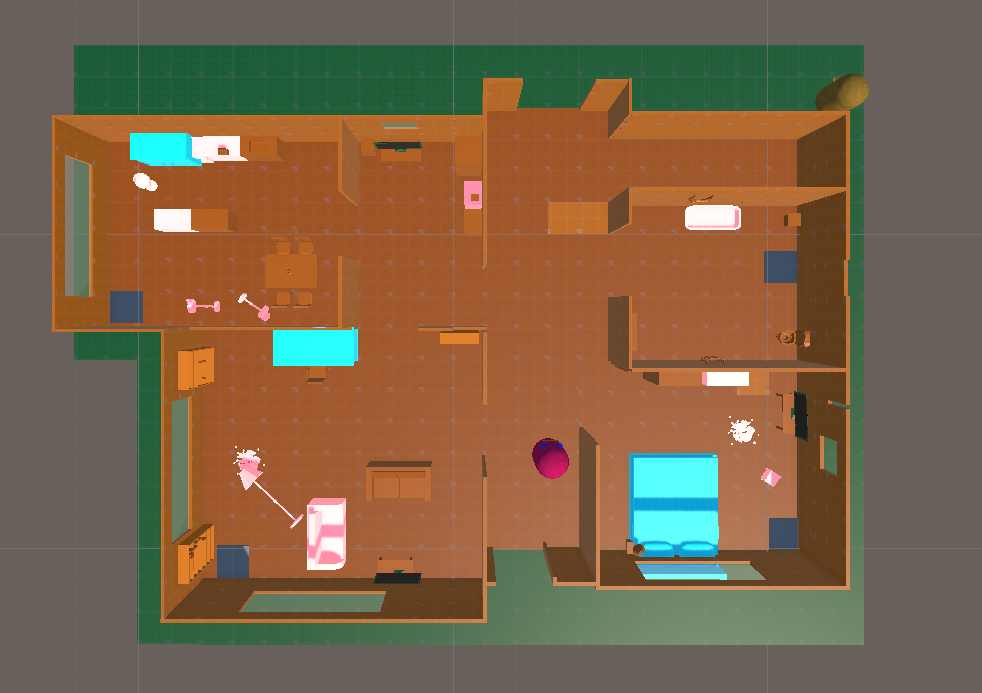
Designing for a single shared camera meant layout directly affected pacing, tension, and fairness. Large open spaces reduced pressure. Tight corridors caused frustration, especially when moving furniture cooperatively. Verticality introduced camera and physics instability.
Solution
We iterated through 10+ greybox variations, testing:
Room density
Corridor width
Sightlines
Object clustering
Player collision stress points
Verticality (stairs) was removed to preserve camera stability.
Impact
Final layouts balanced pressure with fairness, maintaining tension without restricting coordination.
3. Hybrid Clay Production Pipeline
Problem
We wanted a distinctive, handcrafted clay aesthetic — but shared-screen gameplay required strict performance optimisation. Asset density and polygon count risked destabilising frame rate.
Solution
We developed a hybrid pipeline:
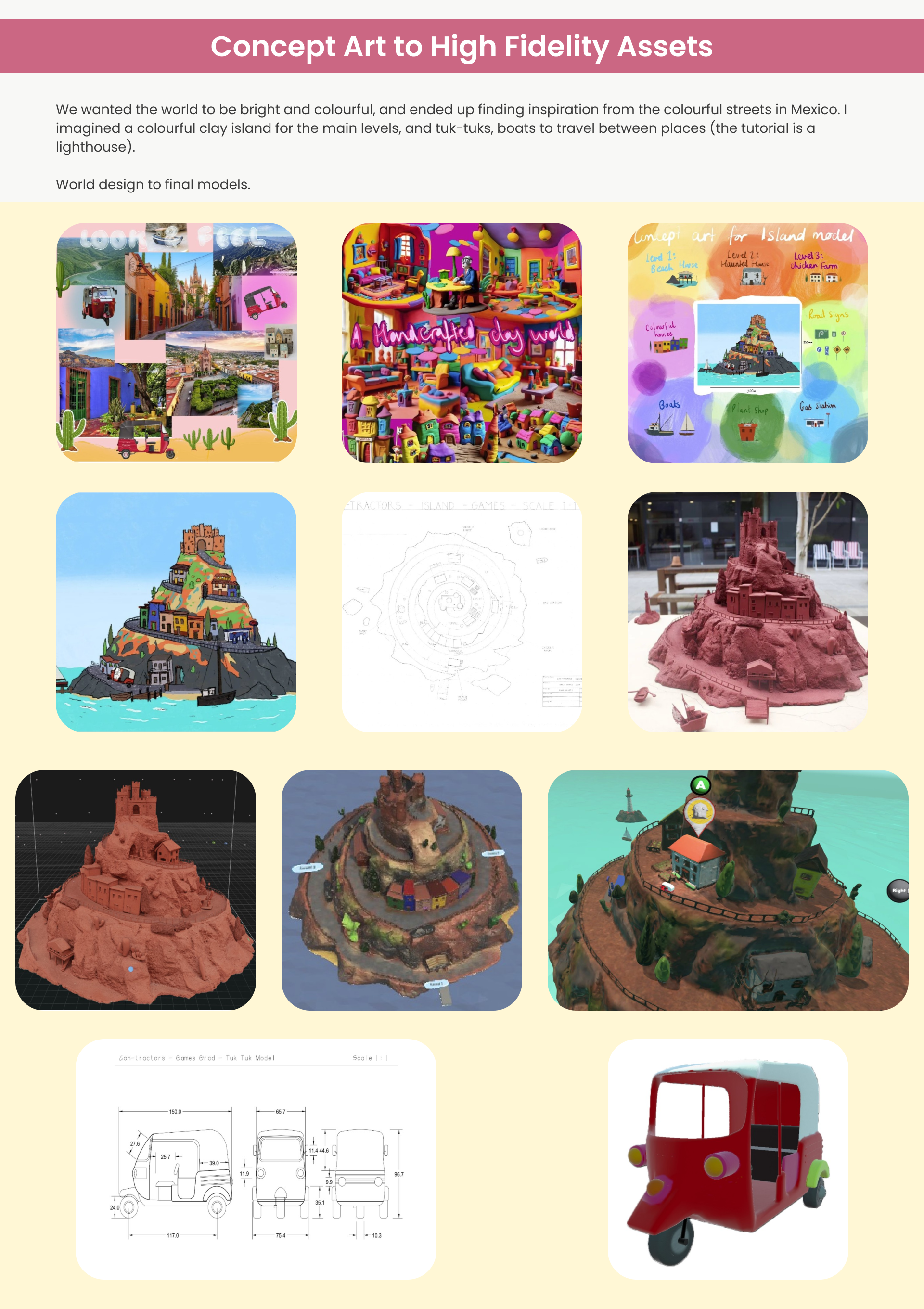
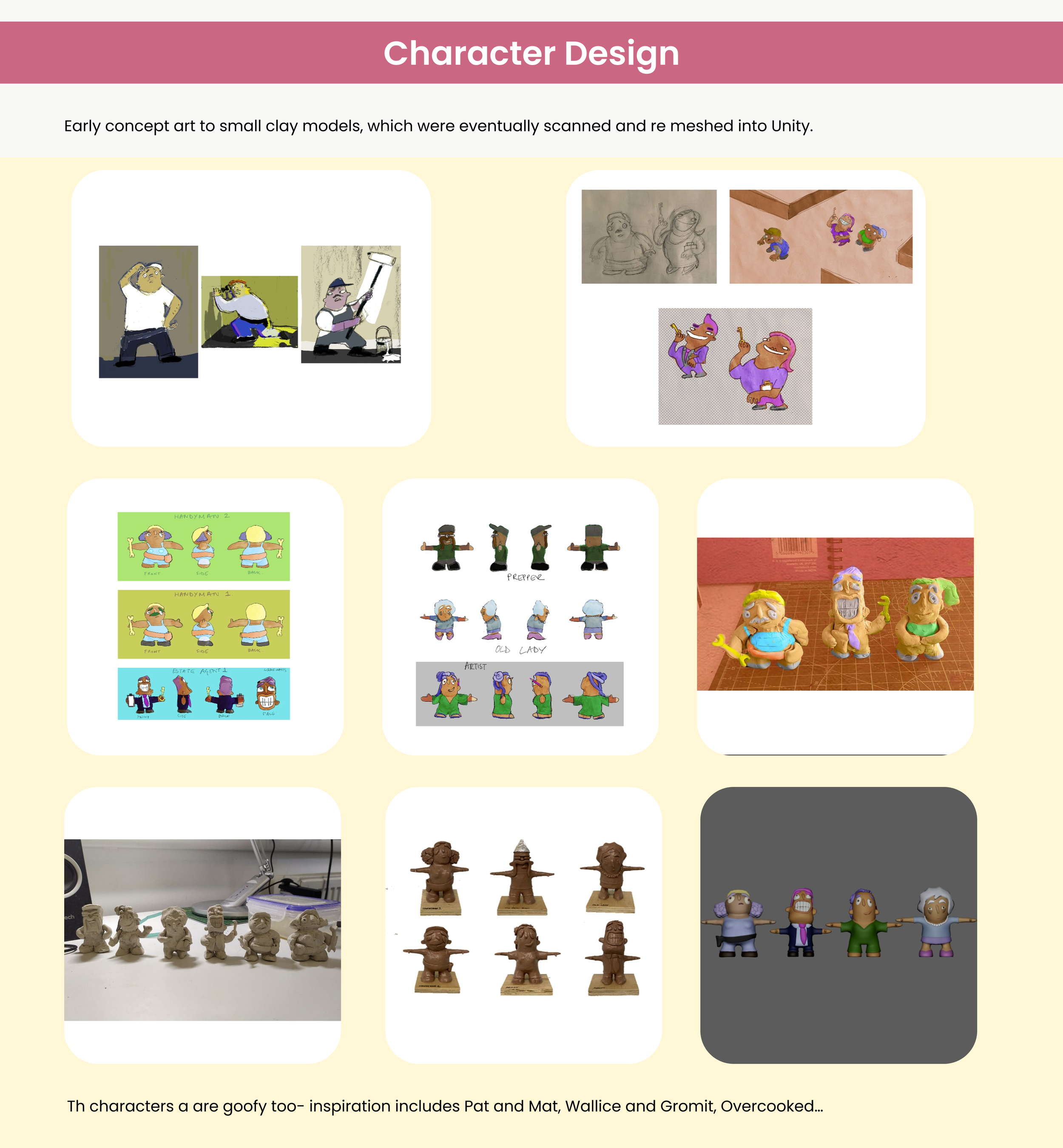
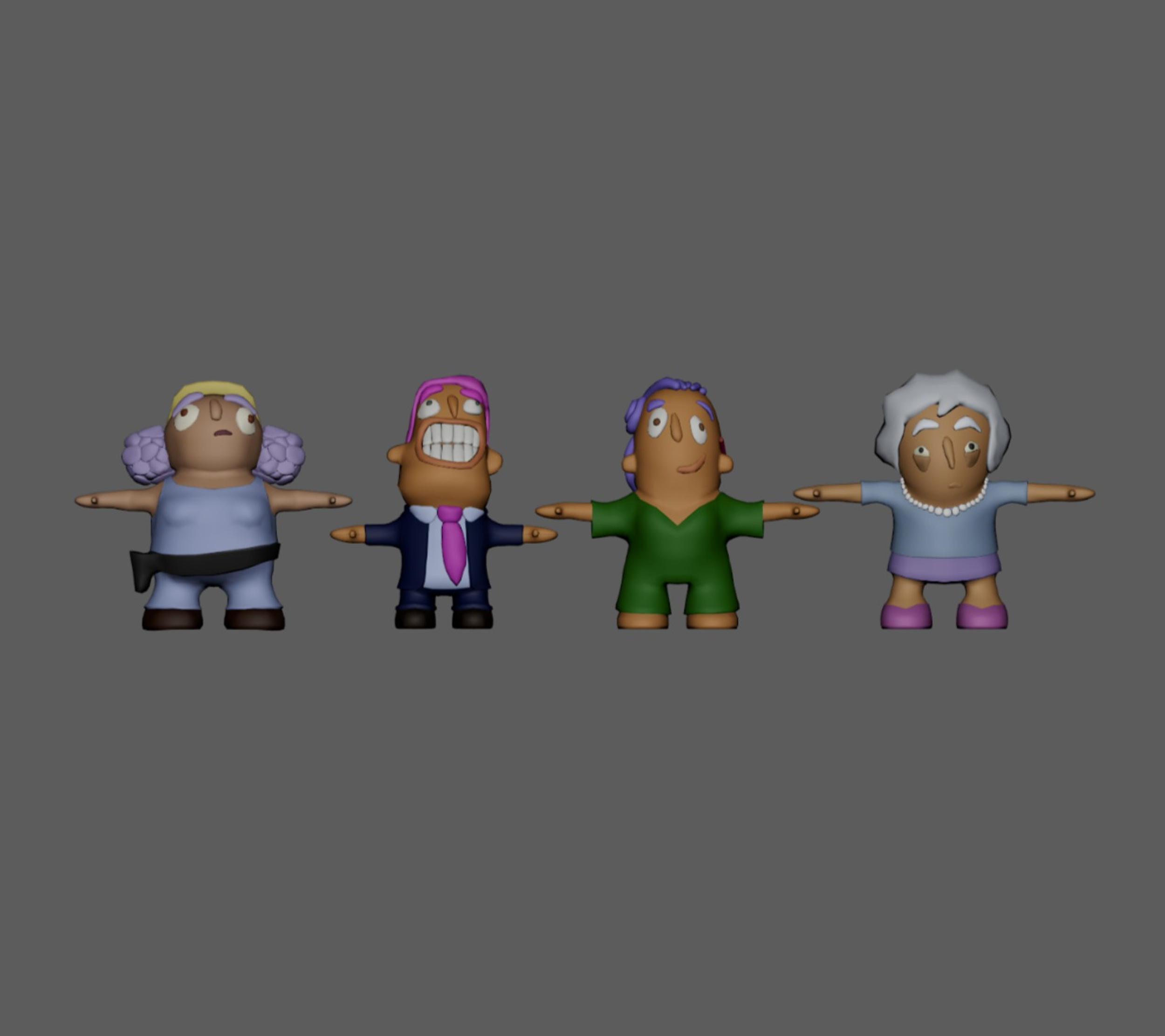
Hero characters and key props sculpted in physical clay, photogrammetry scanning, retopology and baking/ texture maps for Unity integration
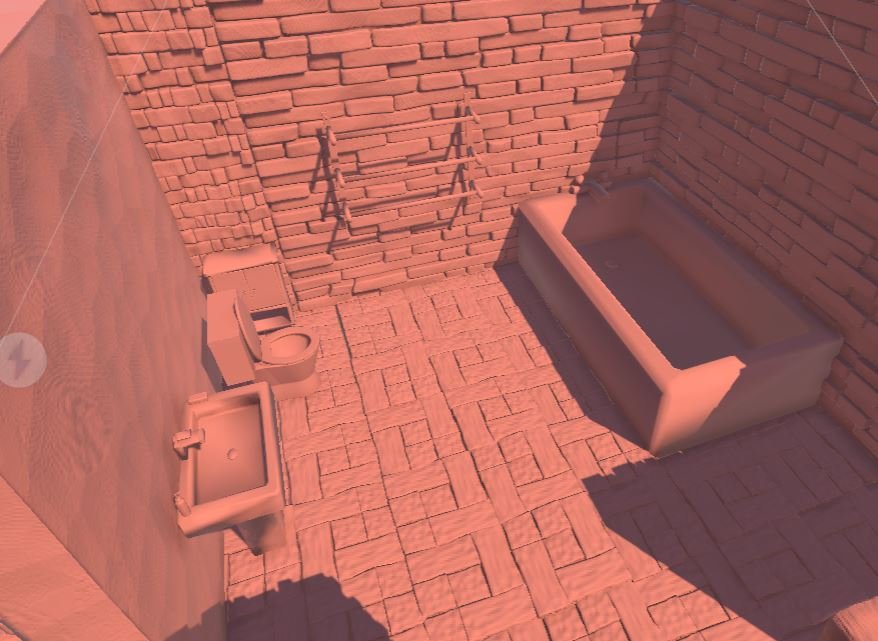
Smaller objects/ not seen from far away were part of a modular system built in Maya- low poly, we used a clay shader to make them look cohesive.
Asset density was continuously monitored during integration.
Impact
The game achieved a unique tactile visual identity while maintaining technical stability during peak gameplay.
4. Scope vs Quality
Problem
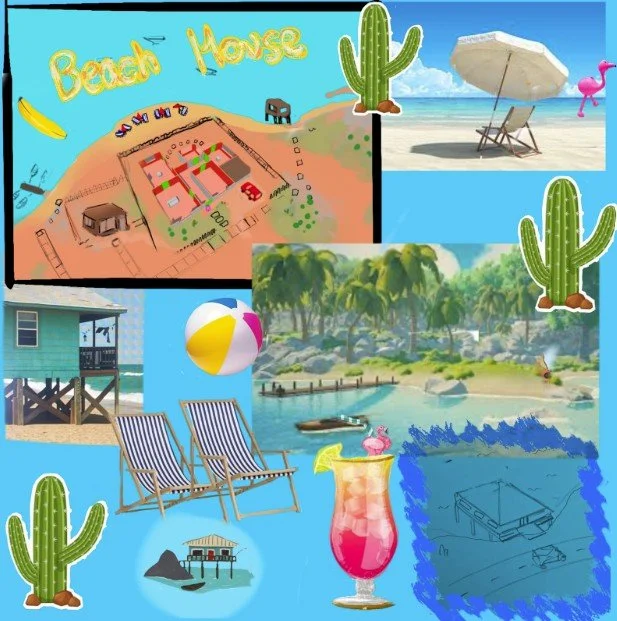
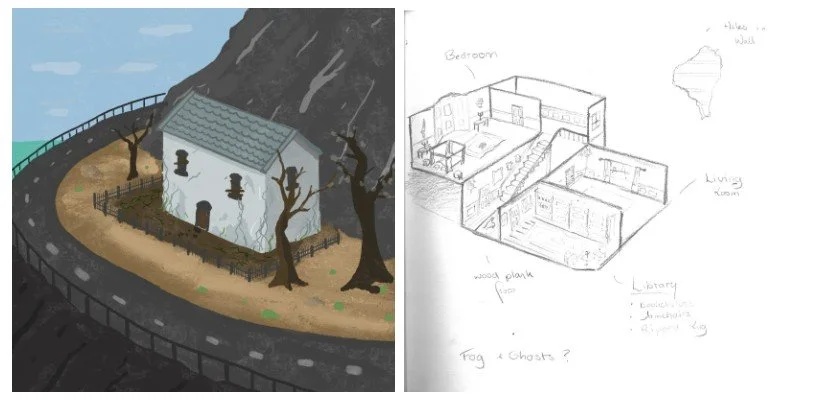
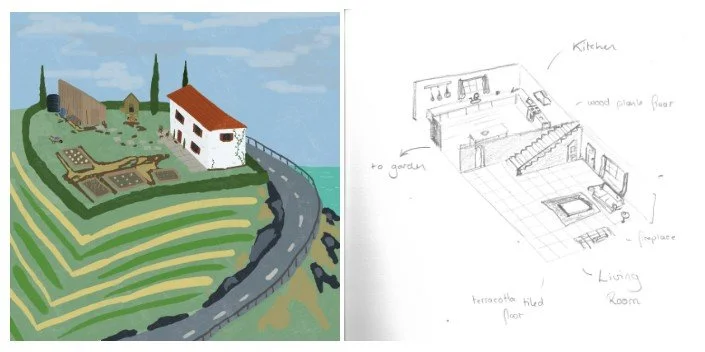
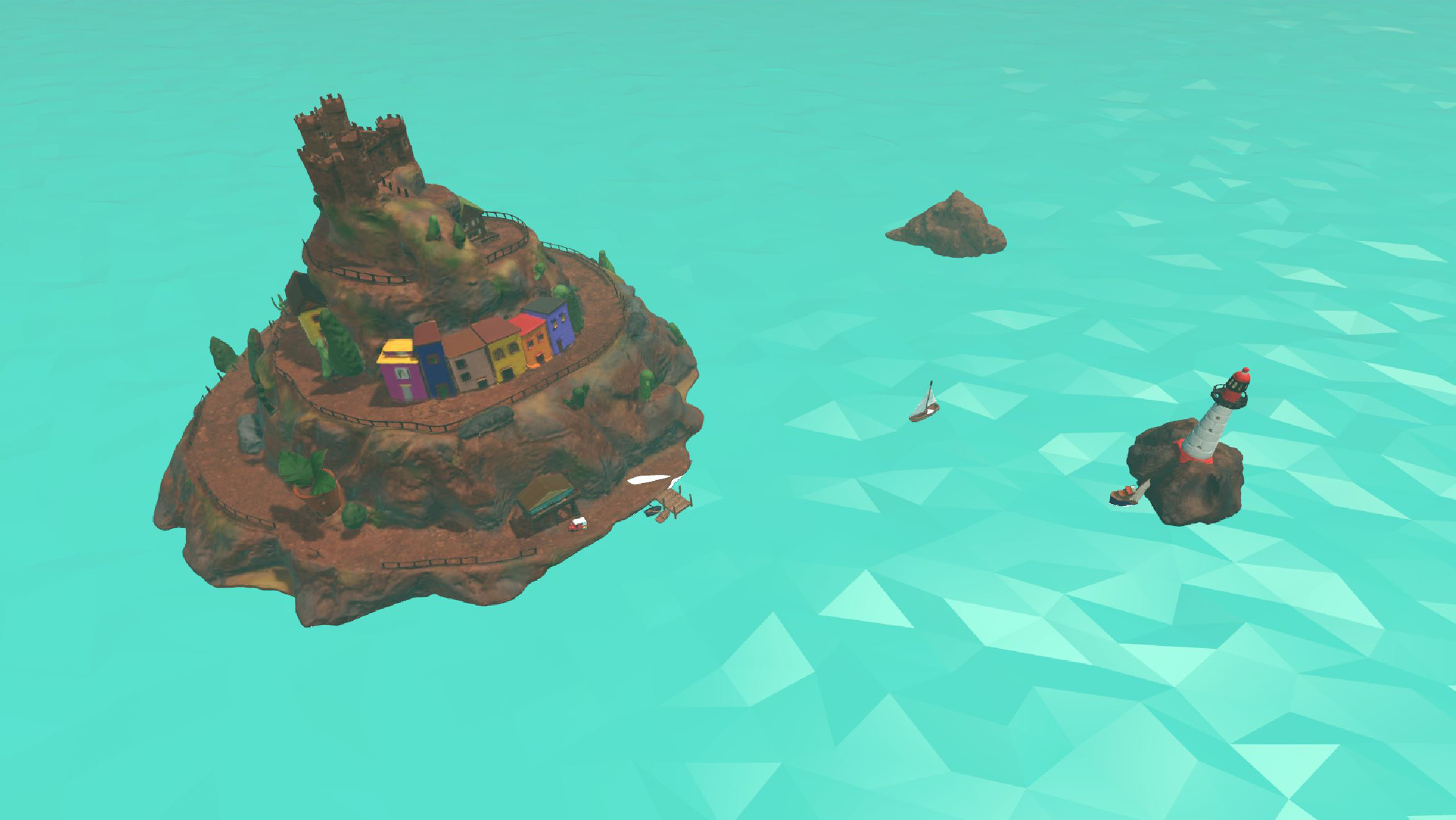
The project was originally scoped for five handcrafted levels within a 9-month window while leading a 45-person team. We created concept art for a tutorial, a beach house, a haunted house, a chicken farm, and a castle, which are included in the world select. Each level was suited to a different character, seeking different things from the property. However, in production, we realised we were cutting ourselves too thin and compromising the polish.
Solution
Midway through development, we reduced scope to one fully polished exhibition-ready level (including the house ad and virtual tour, tutorial level, moving boats and tuk tuk round the level to reach different areas), prioritising depth and system refinement over breadth.
Impact
The final build felt cohesive, stable, and replayable — and had a solid, fun core game play loop and user experience.
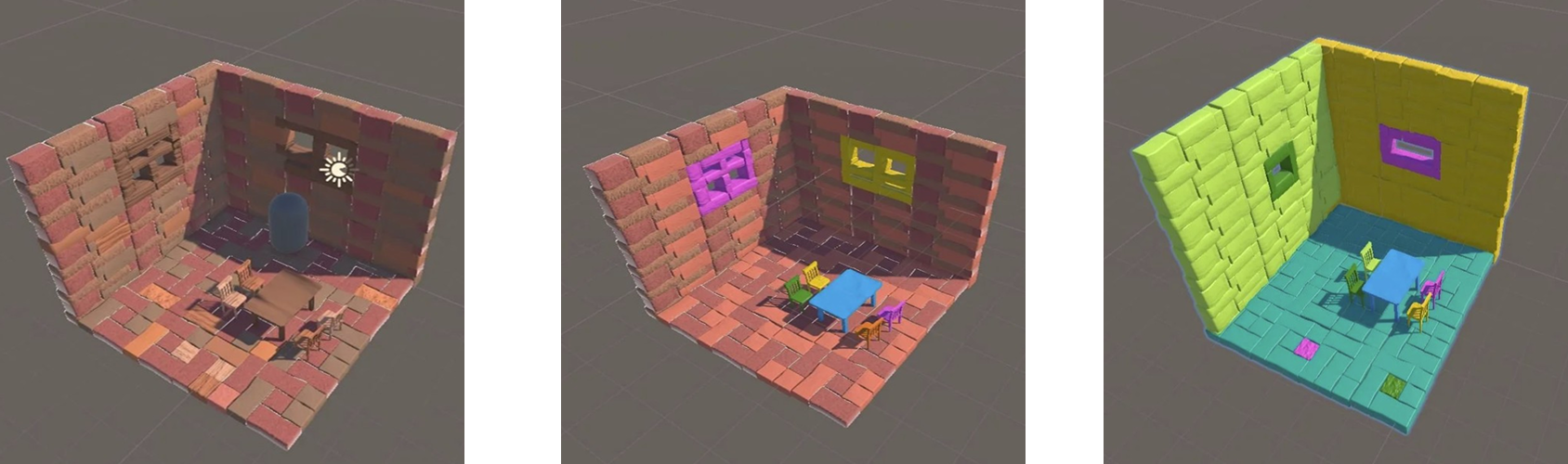
1. Designing Chaos That Remains Readable
Problem
Multiple systems were active simultaneously: repair states, destruction events, timers, scoring, client mood indicators, and player movement within a shared camera. Early builds became visually noisy and difficult to parse under pressure.
Solution
Rather than increasing UI overlays, we embedded feedback directly into the world.
We implemented and tested:
Outline shaders for interactables
Colour-coded repair states
VFX for damage and restoration
Simplified HUD hierarchy
Impact
Players could quickly prioritise tasks without breaking immersion. The experience remained frantic but legible.
04. Result
The final build included:
Structured tutorial
World select & introduction sequence
One complete beach house level
Refined scoring and client satisfaction systems
Performance-optimised shared-screen gameplay
The game was showcased at EGX and MCM Comic Con, featured on CBBC, and exhibited at BFI. It generated publisher interest from Apple Arcade and Raw Fury. Reducing the scope strengthened the experience and led to a suucessful product within the time constraints.
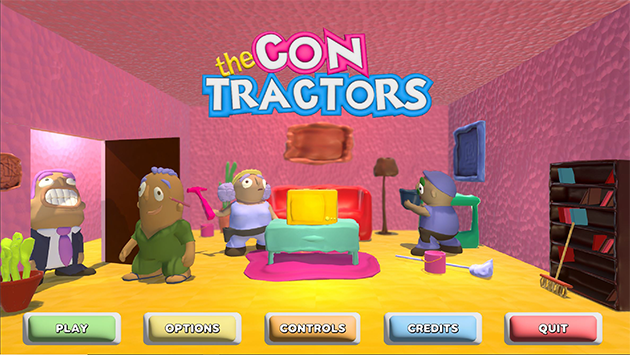
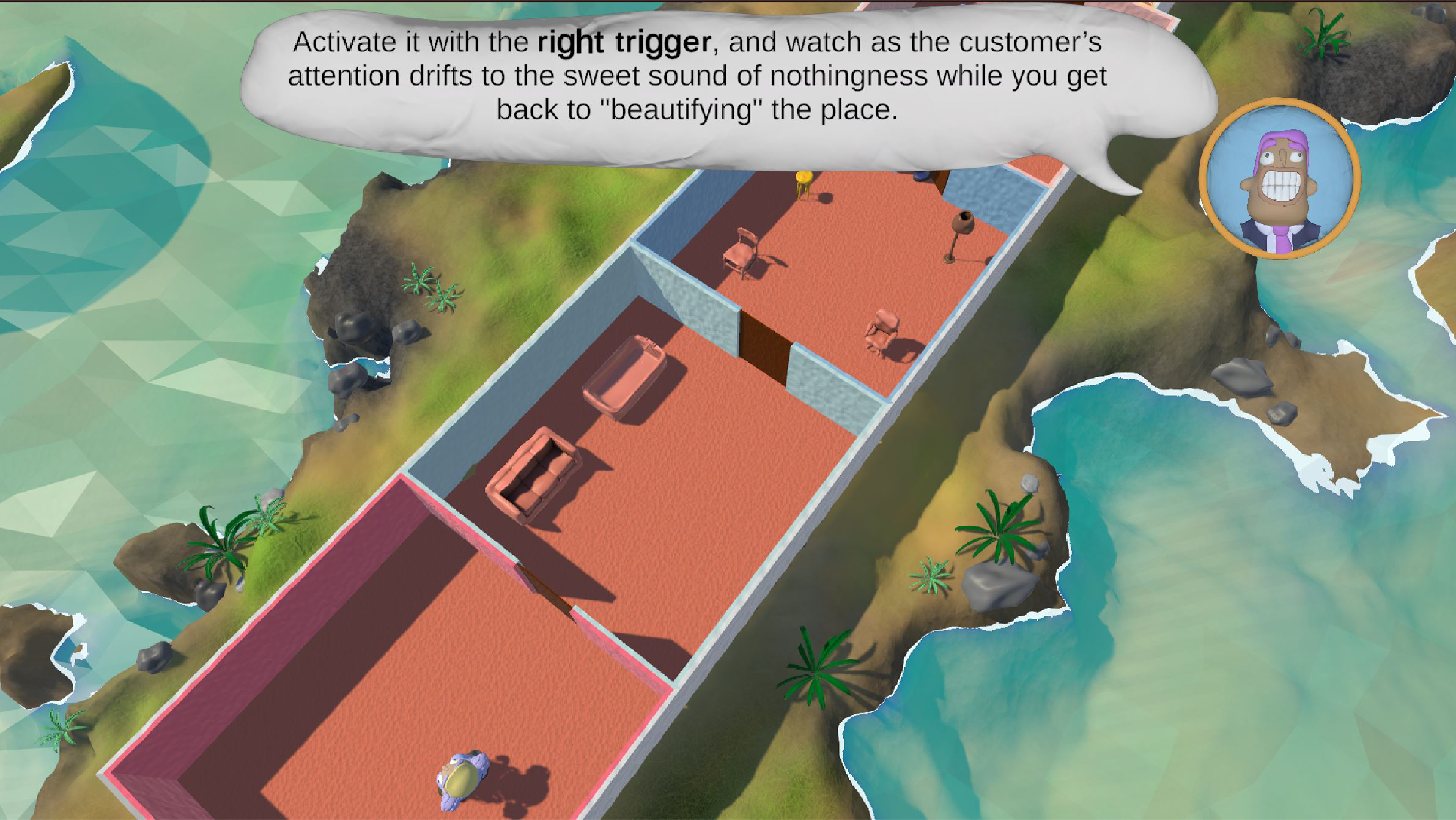
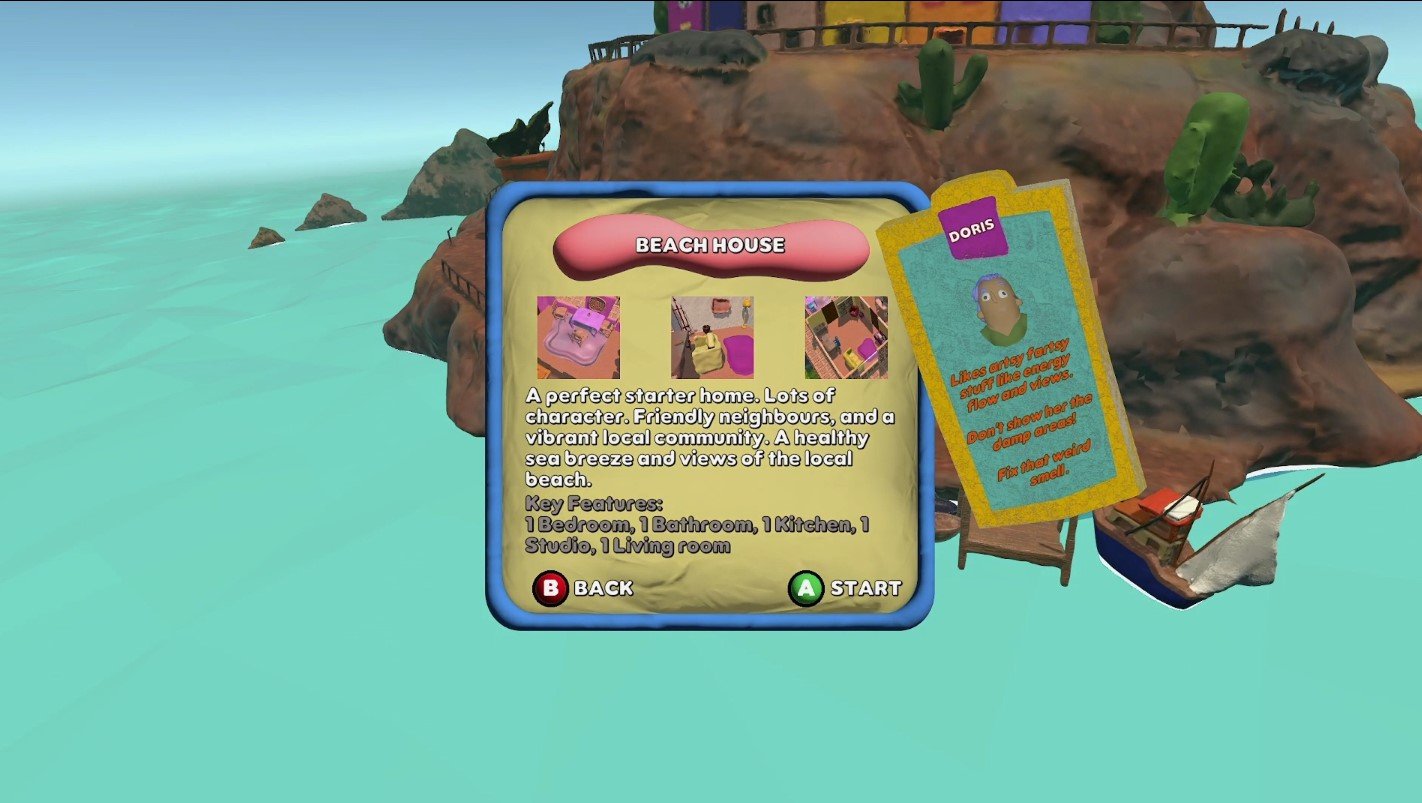
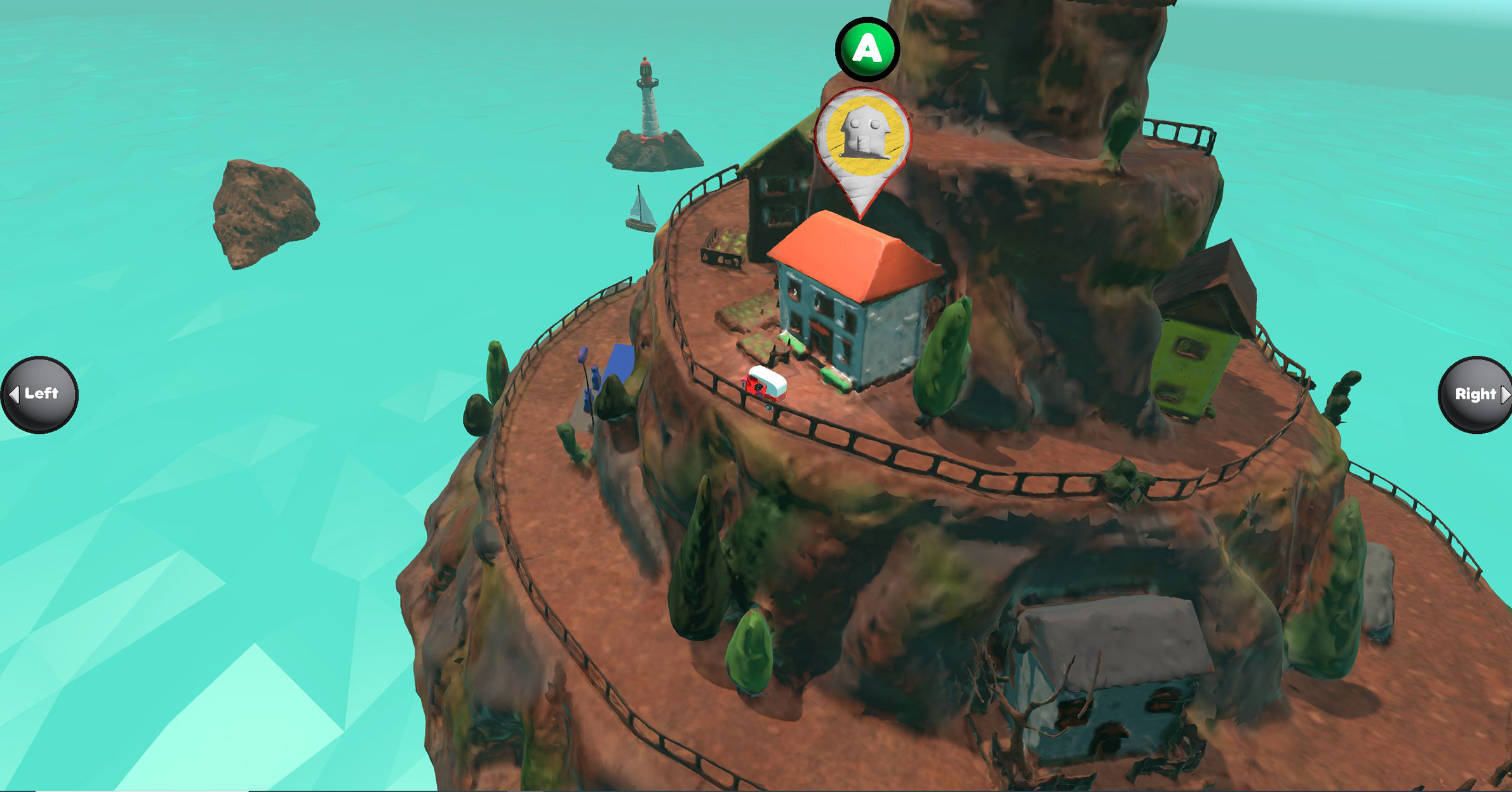
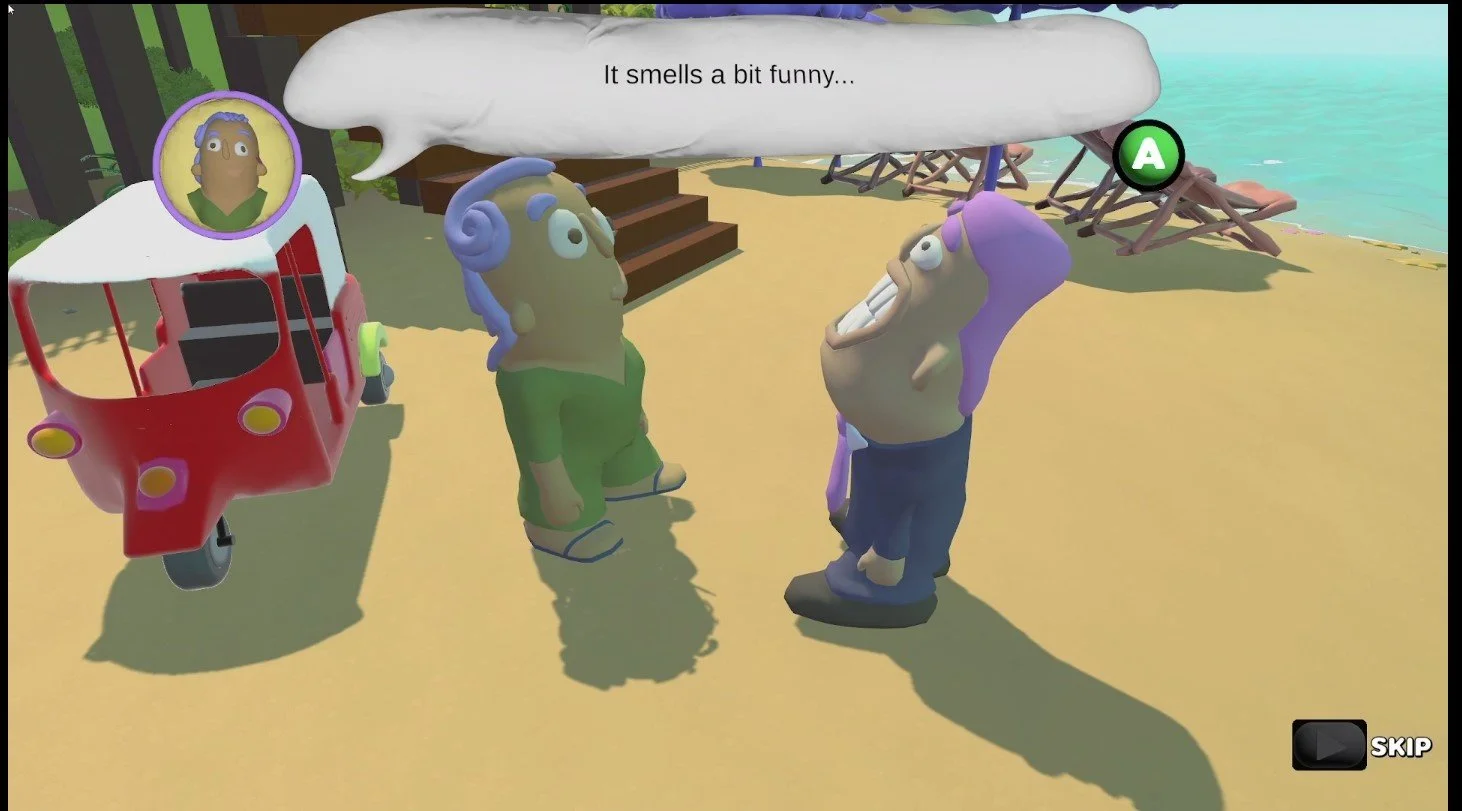
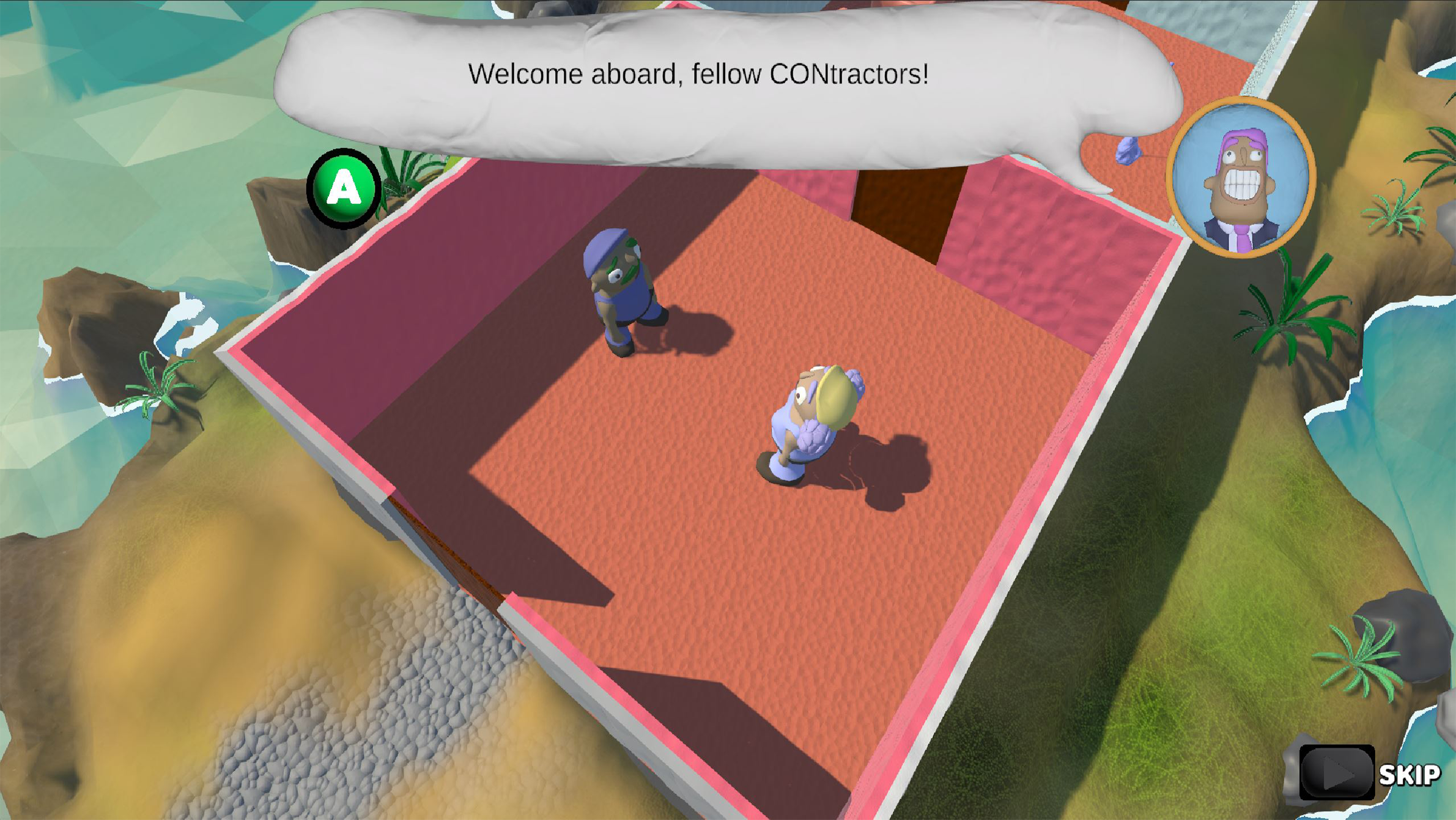
Pictured: Gameplay shots from The Contractors.
05. Play the game
Check out the playable build on itch.io. A downloadable game for Windows.
Download here