Miles Better
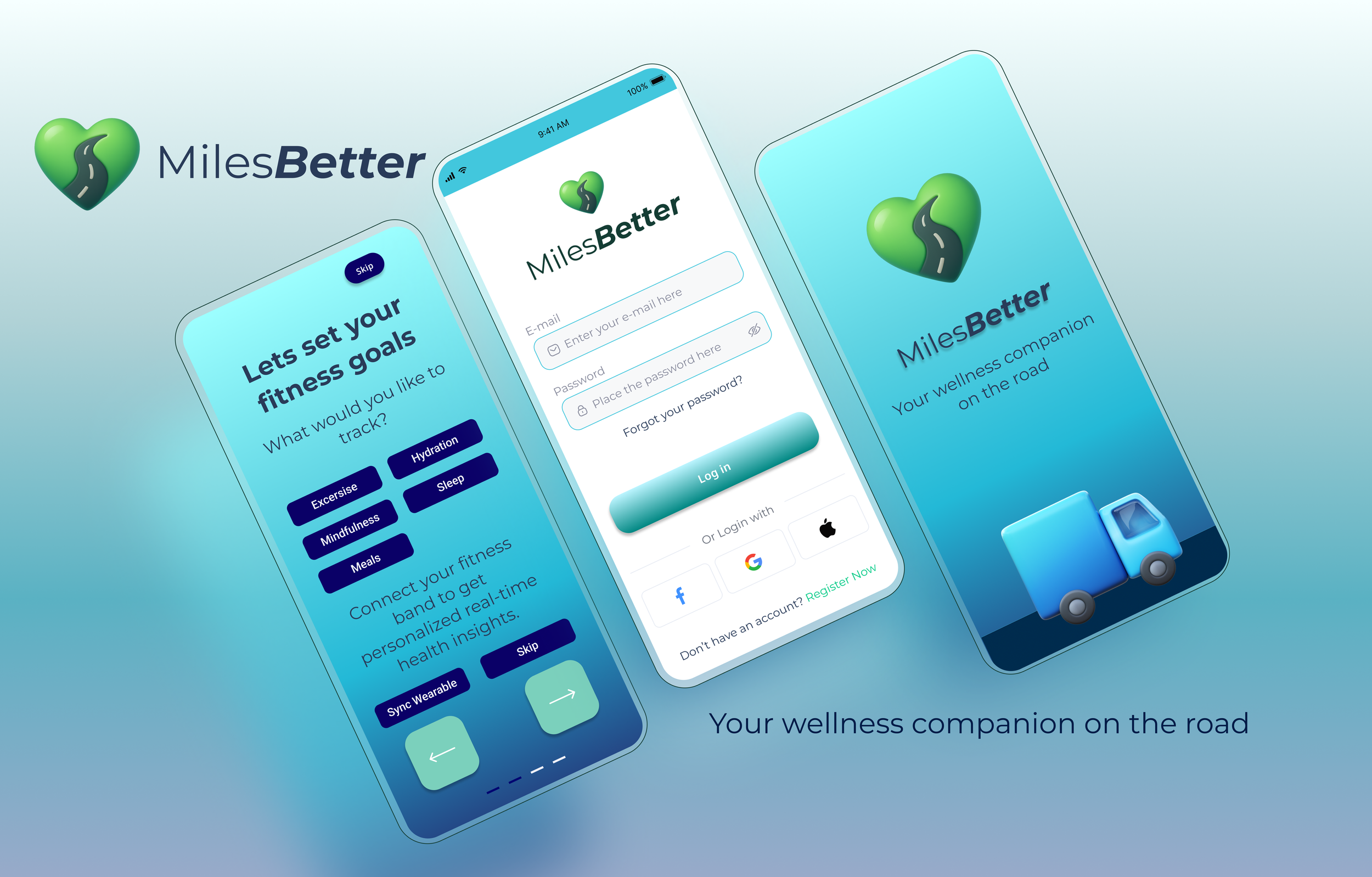
A wellness app and wearable integration for HGV drivers to support fitness, nutrition, and mental health on the road.
Scoped down from a larger product concept to help minimise travel times on the road, at pick-up and delivery points, and ensure drivers can find safe parking (overnight) with facilities. Includes an integrated booking platform.
Role
This was a solo project.
Roles included conducting user interviews, developing personas, creating wireframes, and prototypes in Figma.
Download the project here

Research and proposals
Problem:
HGV drivers face unique health challenges- including long hours, limited access to fitness facilities, unhealthy eating habits, and social isolation. Existing wellness apps were too complex, inaccessible, or not suited to drivers’ on-the-go lifestyles.
Solution:
MilesBetter is a mobile app designed specifically for HGV drivers. It provides simple, accessible tools to support mental health, fitness, and nutrition, with features that fit seamlessly into their daily routine, whether online or offline. Features include:
Quick voice or text onboarding
Wellness dashboard with fitness and nutrition insights
Buddy network for driver connections
Offline support for drivers on the move
Note, this is not the full solution to the problems HGV drivers face. Full research proposal here
Design Process
Value Proposition
A wellness app tailored for HGV drivers that supports mental health, fitness, and connection- designed to work on the road, even offline.
User Research
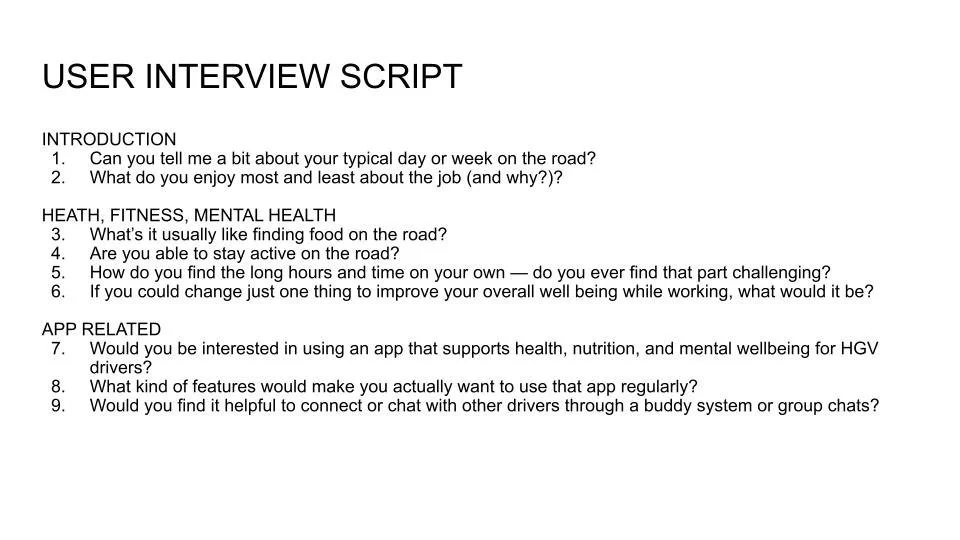
Conducted 6 semi-structured interviews with long-haul drivers
Developed a user interview script focusing on lifestyle challenges, current habits, and attitudes toward wellness tech one from the rest.
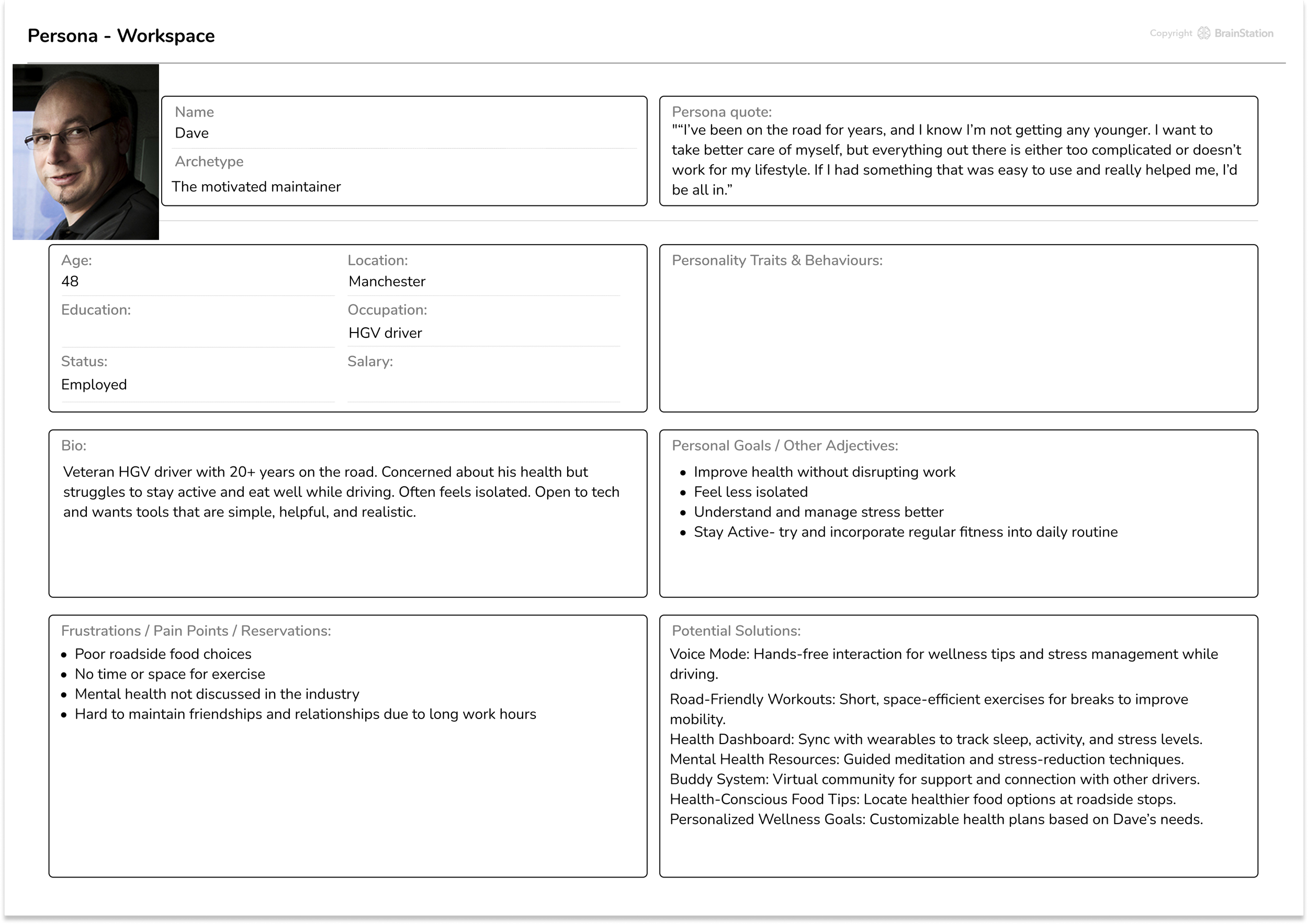
Personas
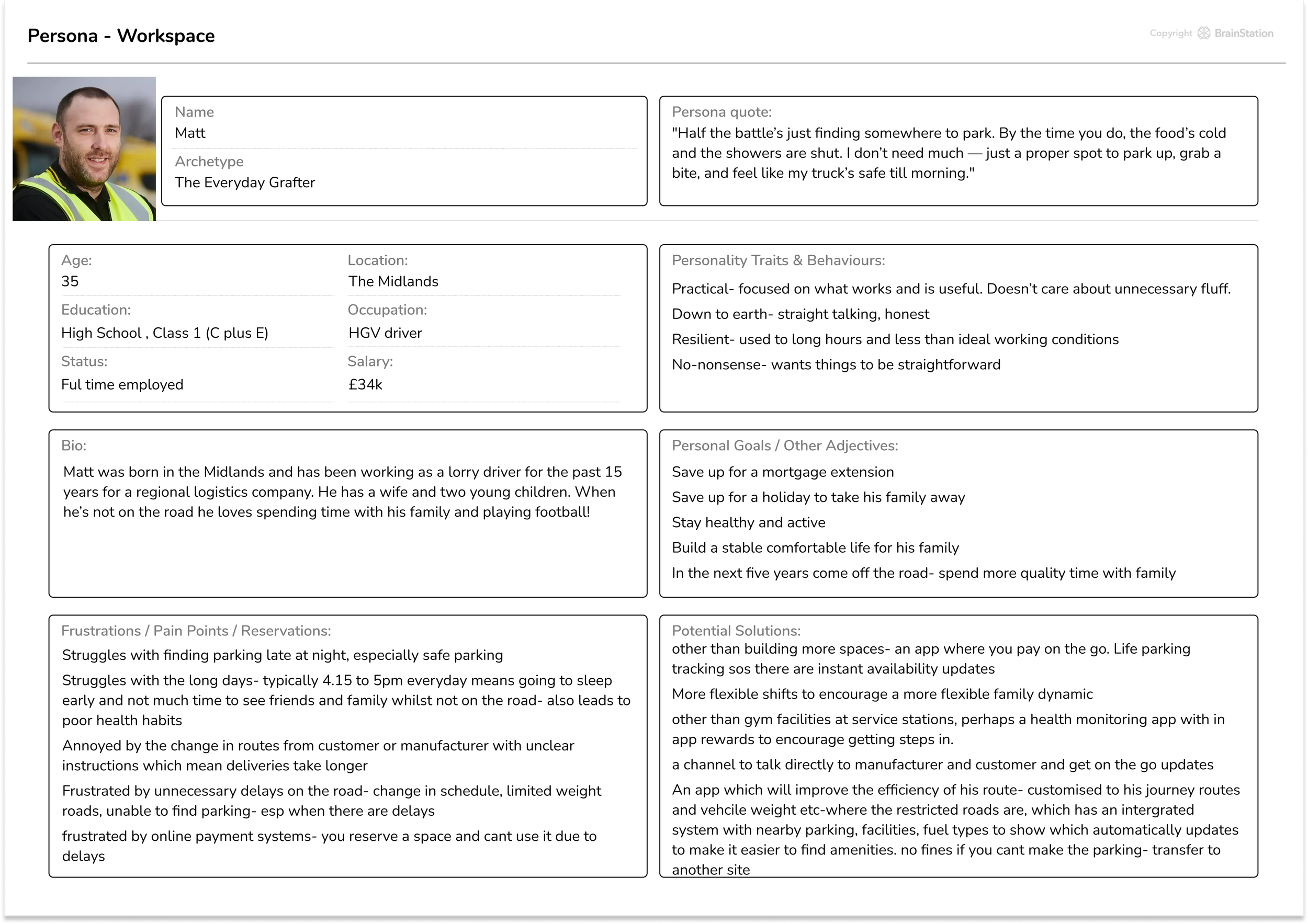
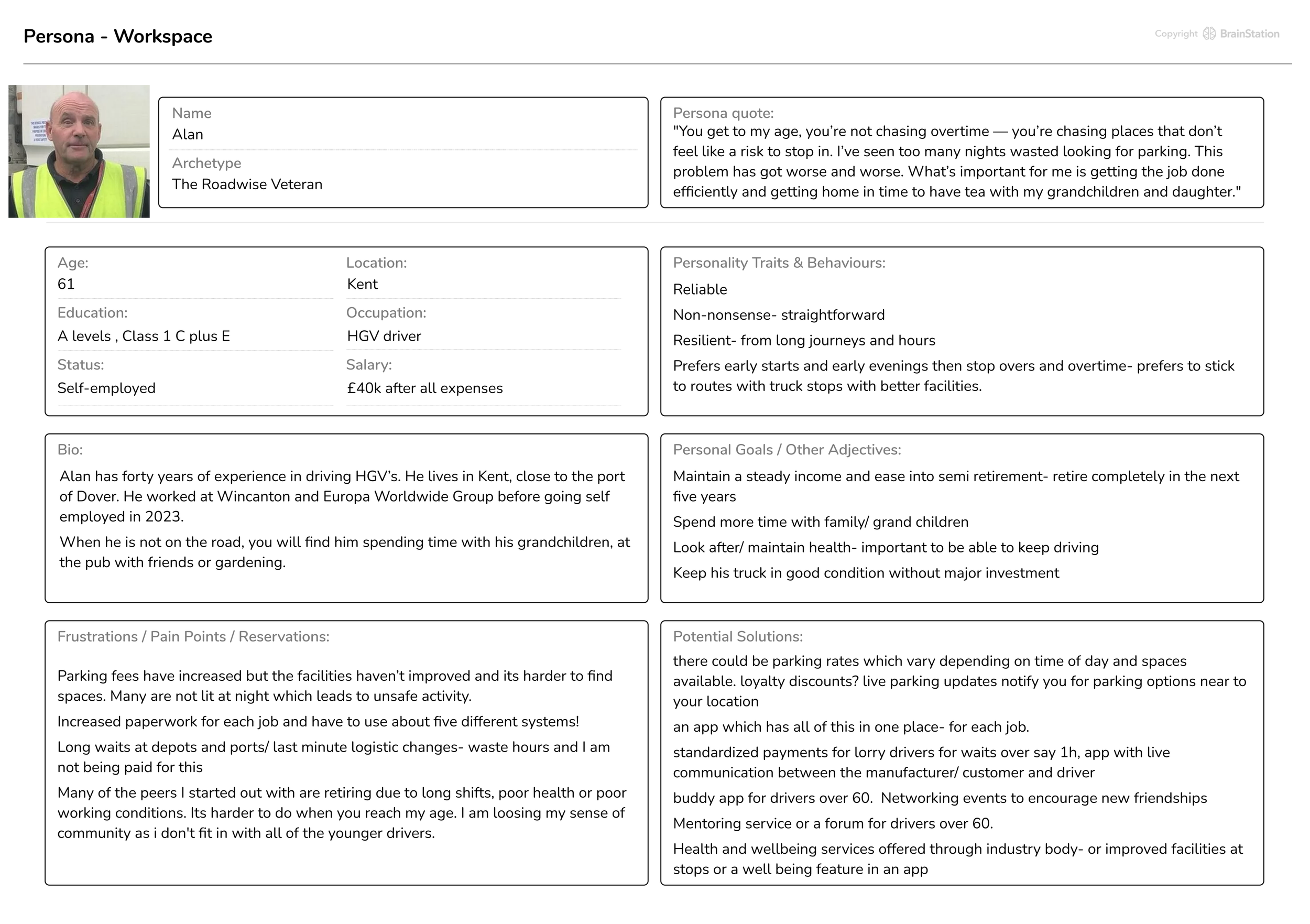
Created three user personas based on patterns and pain points from interviews I conducted.
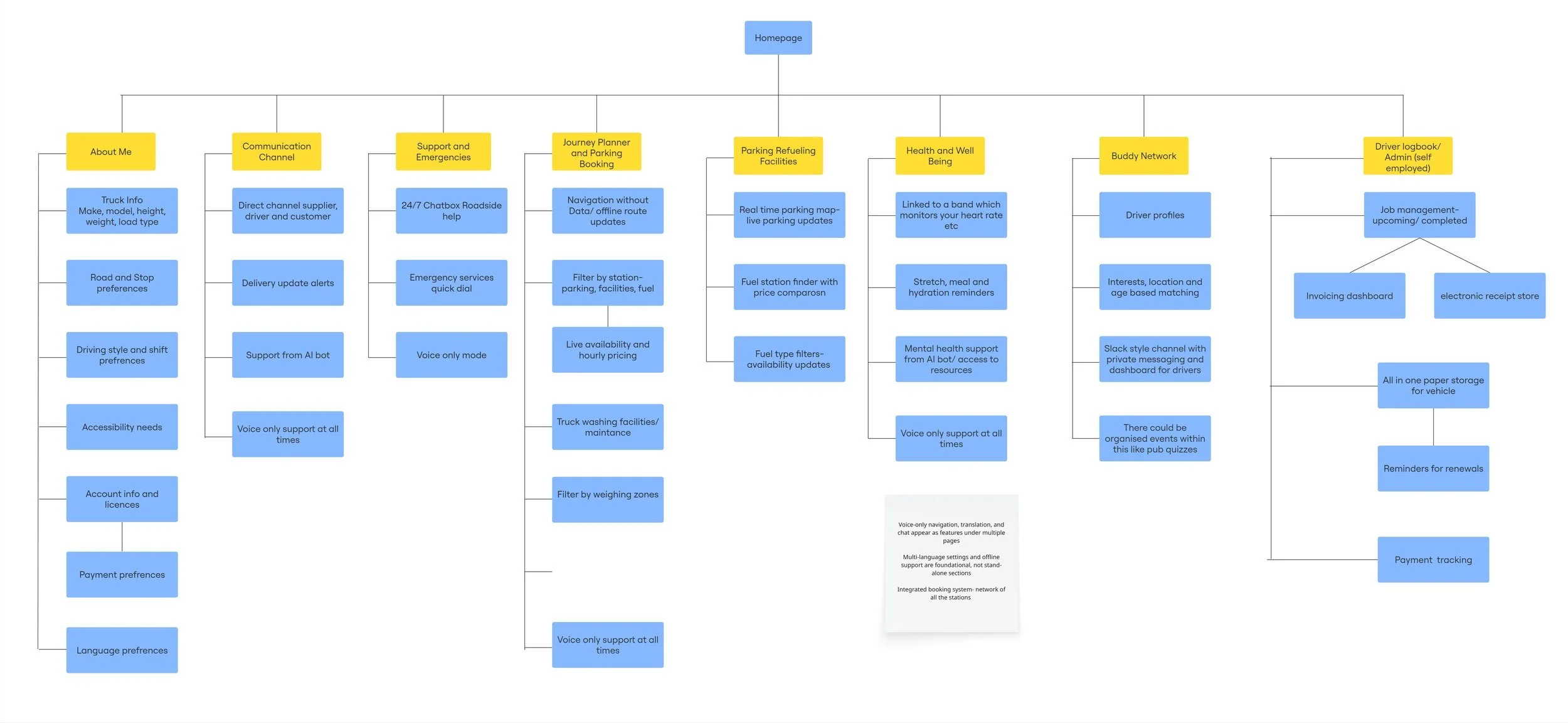
Information Architecture
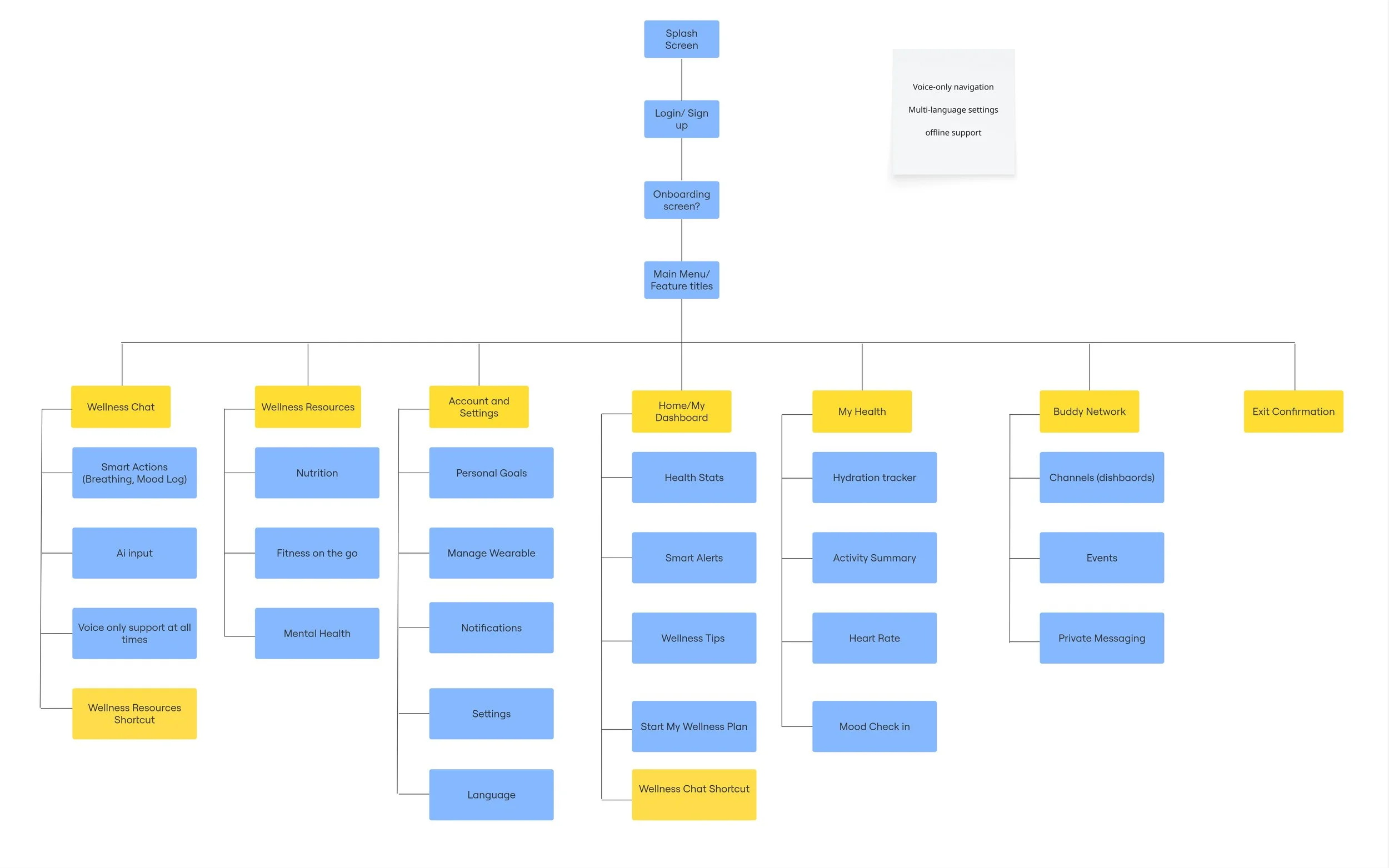
Mapped out the app’s structure to ensure intuitive navigation:
Dashboard
Wellness Resources
Buddy Network
Settings
Help / AI Chat
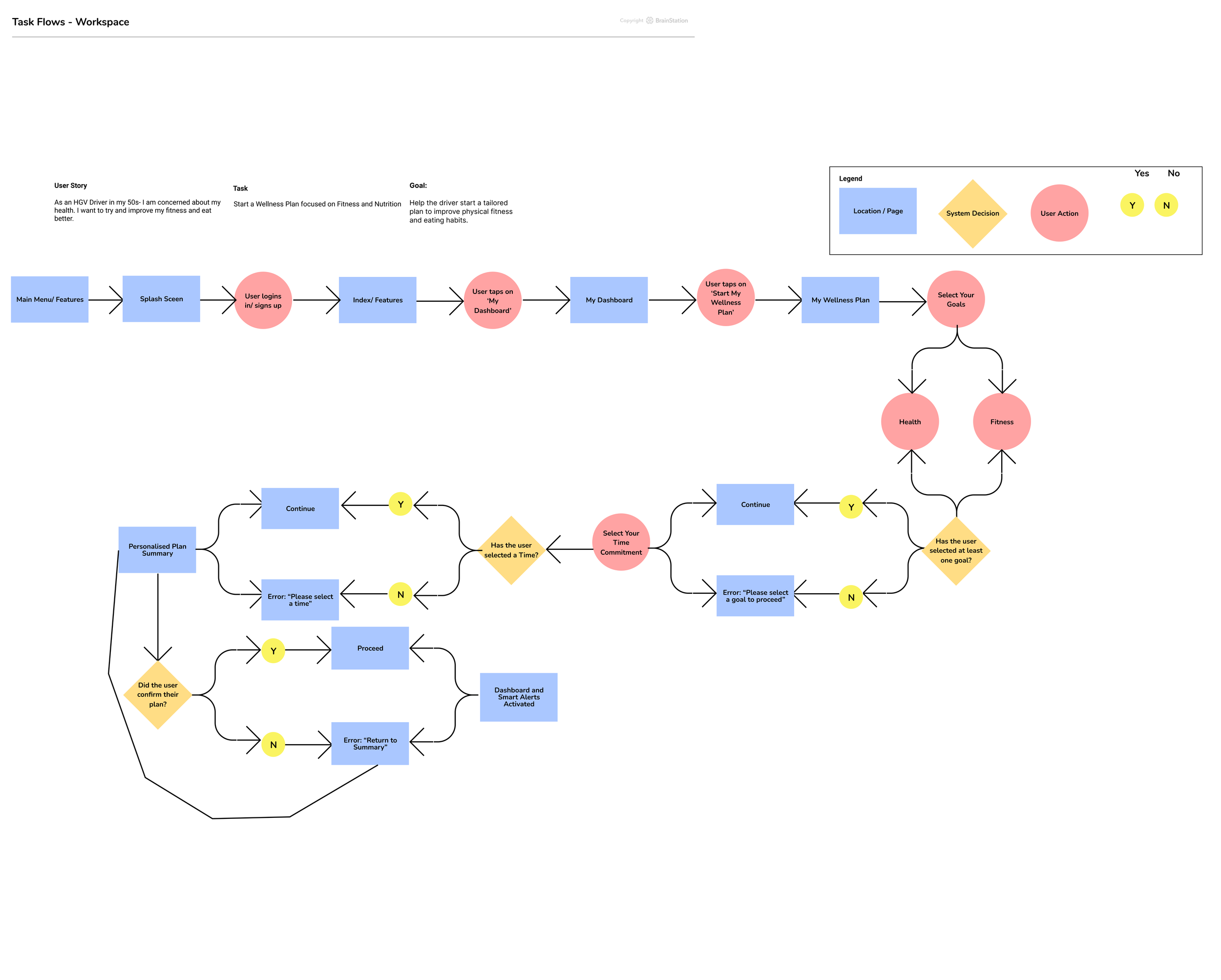
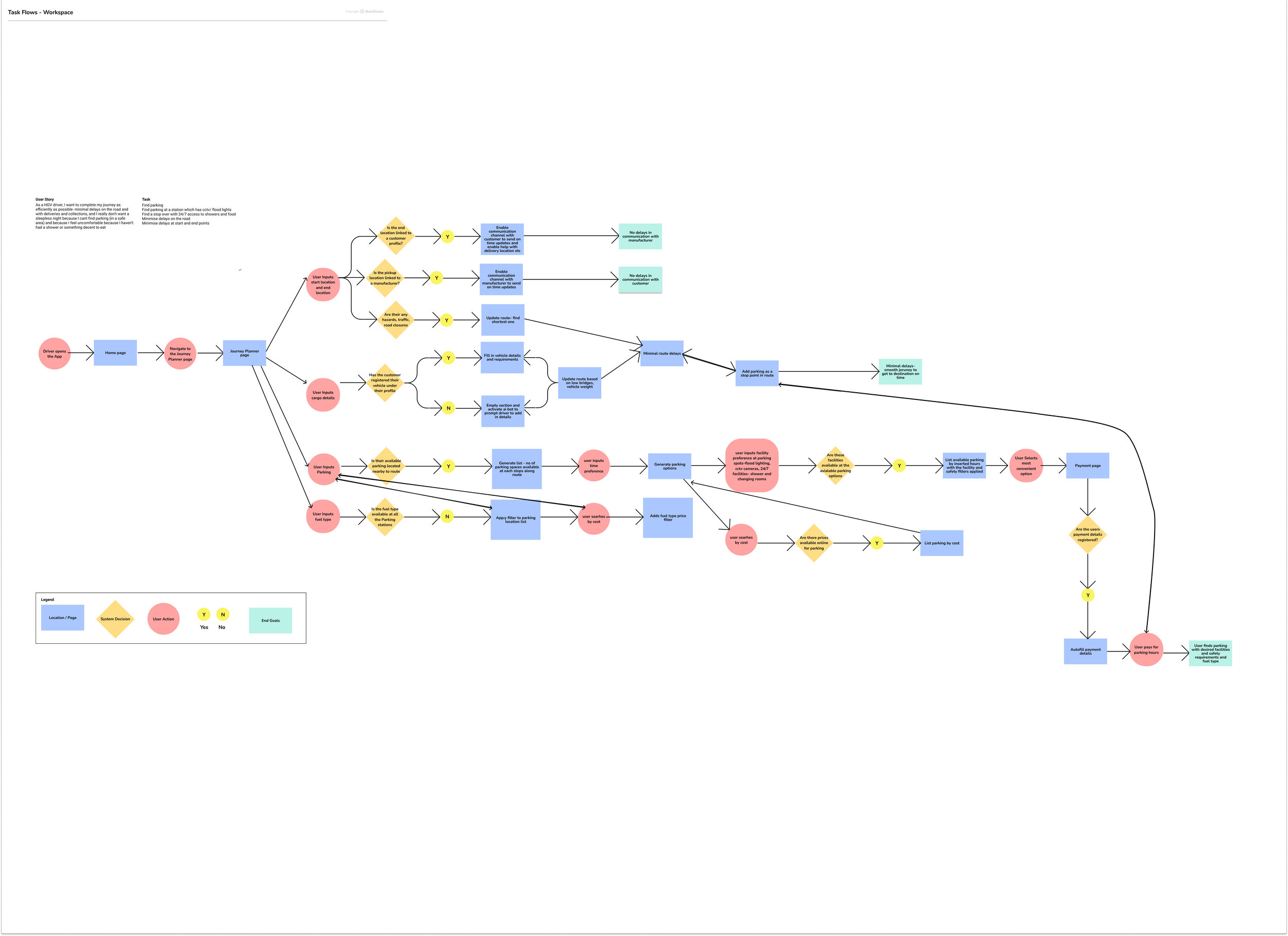
Task Flows
Outlined core tasks for users:
Signing up via voice or text
Tracking wellness stats
Finding and joining driver groups
Syncing a wearable device
Accessing offline wellness content
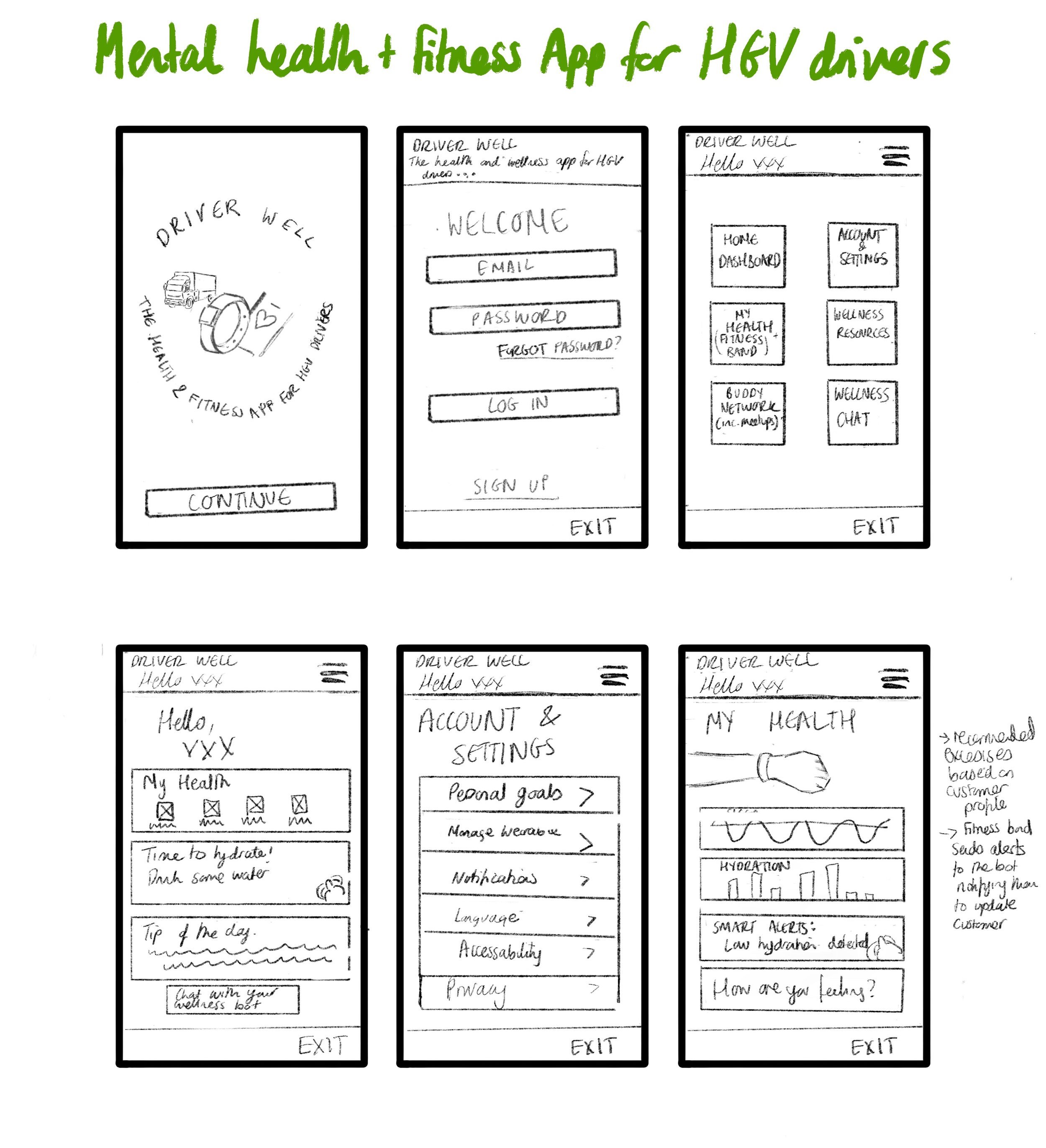
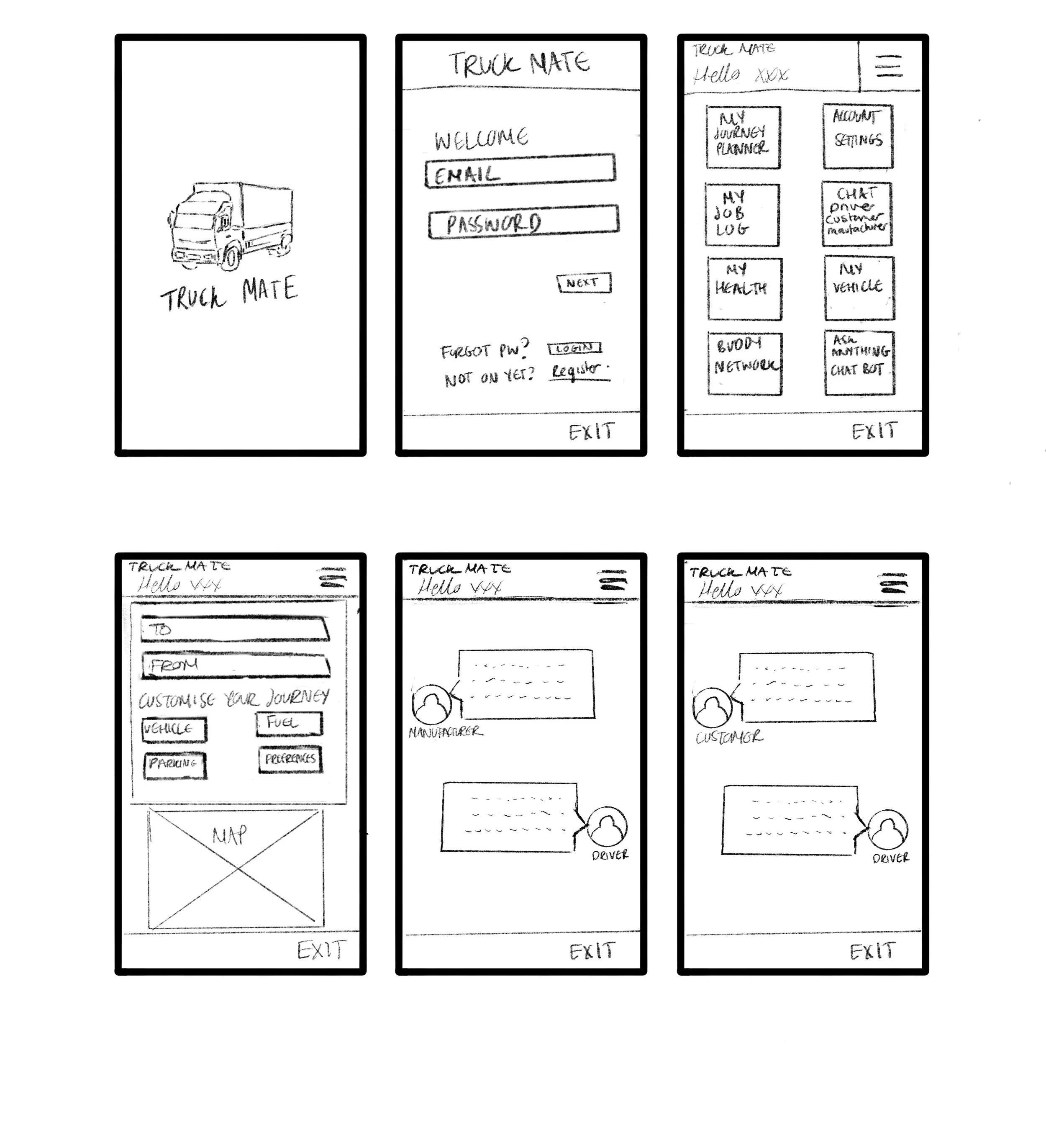
Sketches and low-fidelity wireframes
Created low-fidelity sketches on paper and in Figma- Experimenting with flow and app names.
Iterated wireframes to validate flows and screen hierarchy
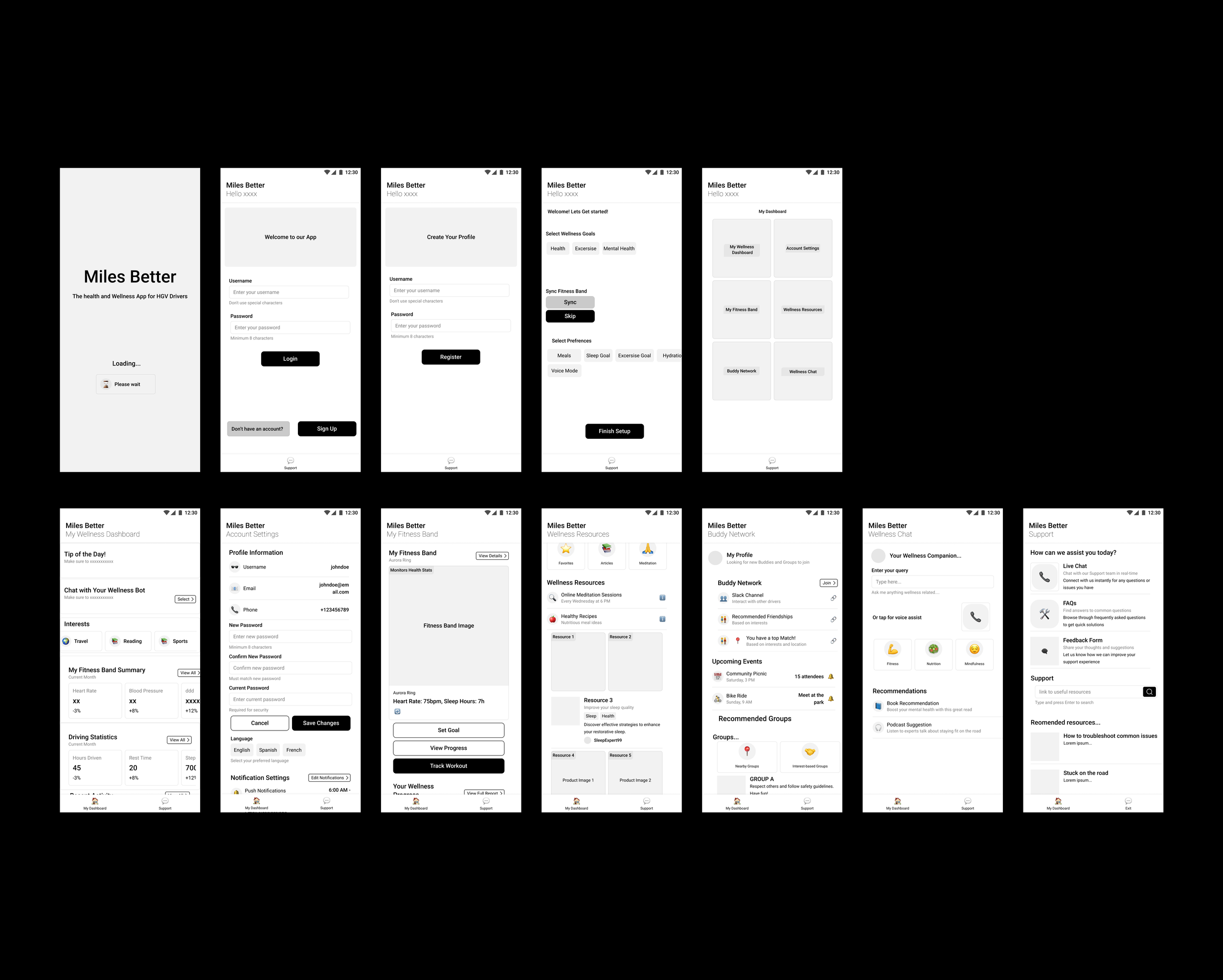
High Fidelity Prototypes
Developed polished UI mockups using a masculine yet approachable aesthetic
Designed for accessibility, clarity, and mobile use under low-attention conditions
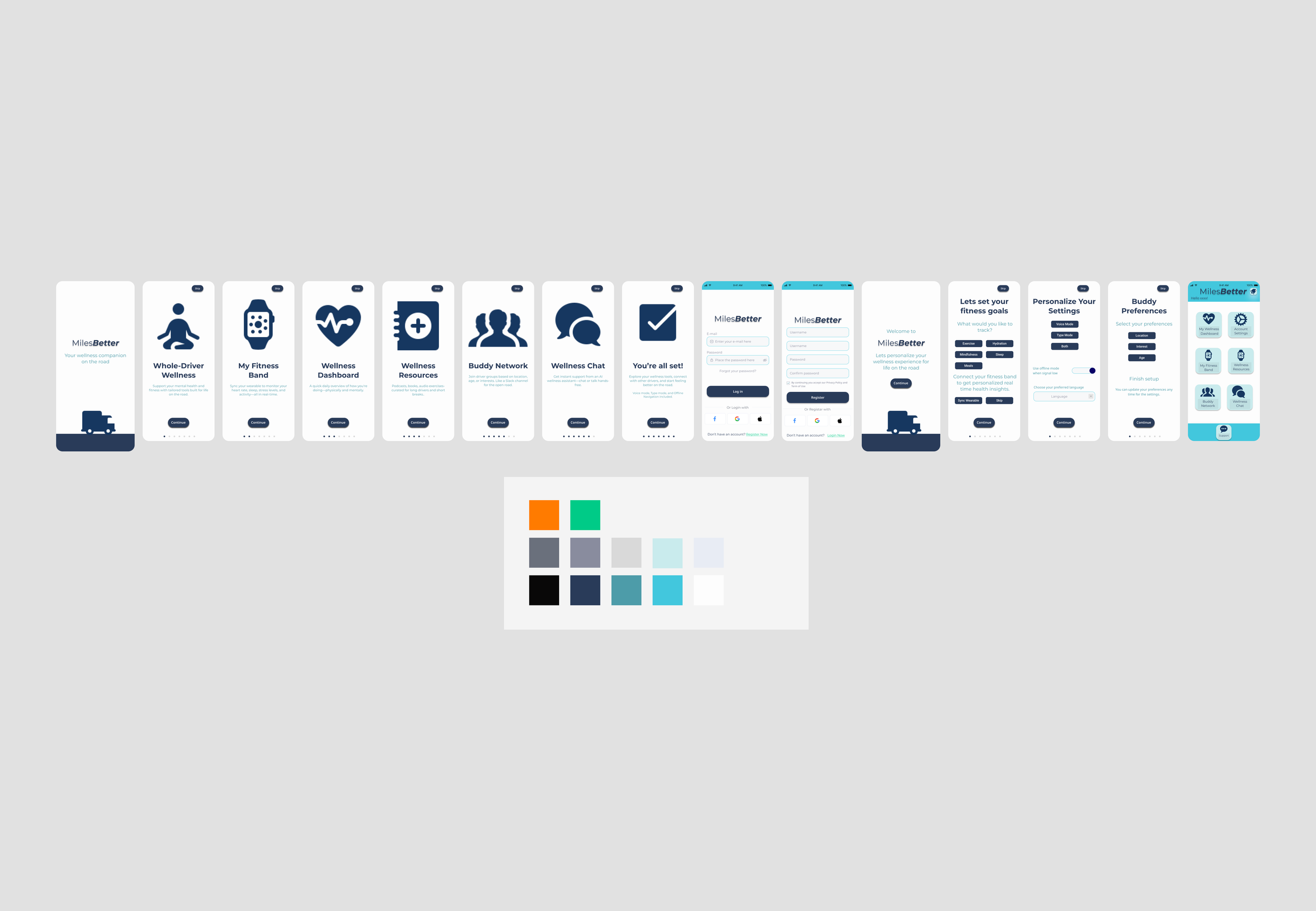
Playable prototype below.
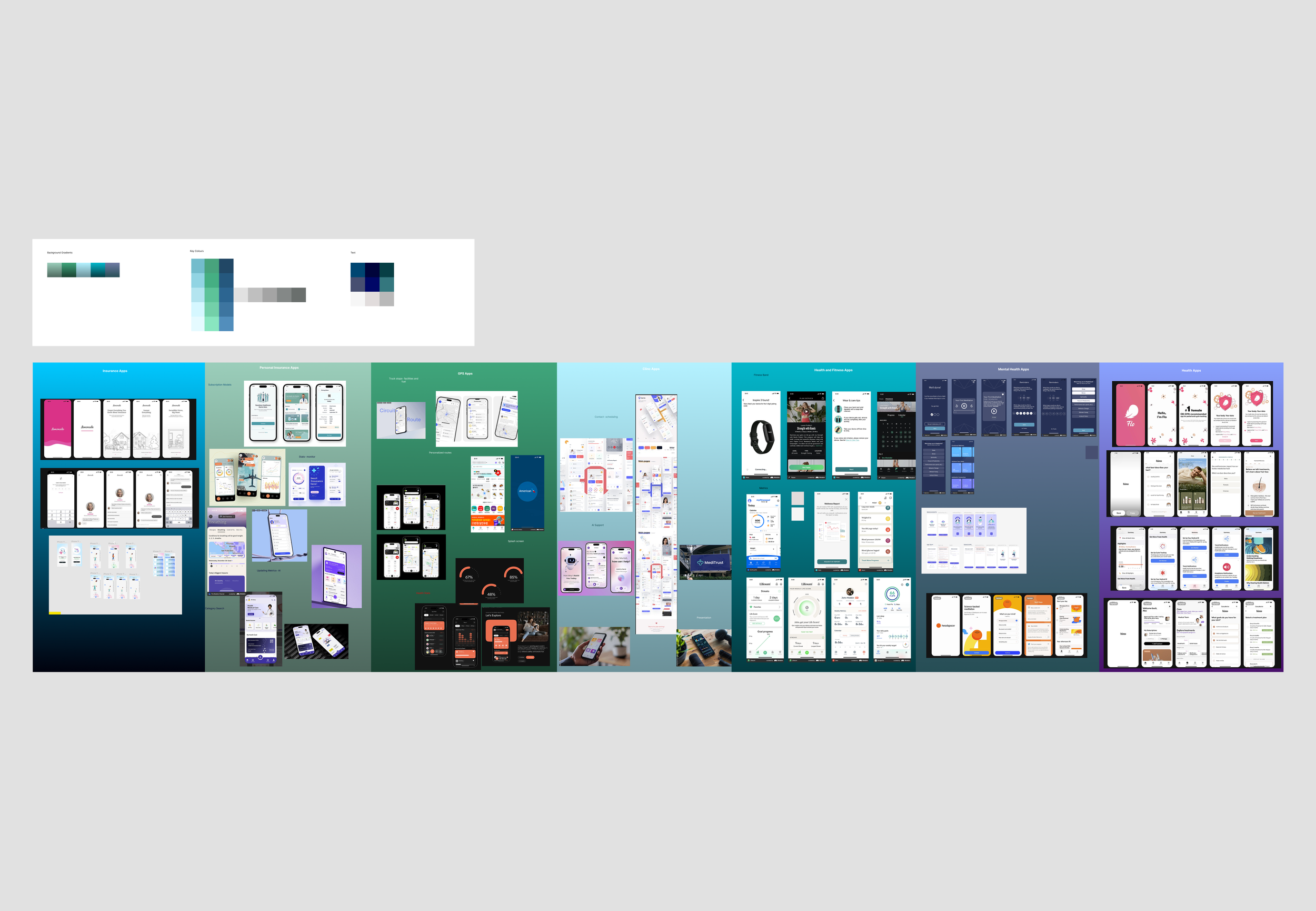
Testing and iteration
Conducted remote usability testing with 3 target users
Adjusted button sizes, reworded onboarding copy, and improved navigation hierarchy based on feedback
Continued iterative testing throughout development
Playable prototype below.
Outcome
MilesBetter delivers a wellness platform tailored to the real-world needs of HGV drivers, with an intuitive, user-centered experience. Designed to boost driver health, promote social connection, and offer wellness support anytime, anywhere.
MilesBetter was created for a group often underserved in tech and wellness: long-haul HGV drivers. Through interviews, prototyping, and testing, I built an experience grounded in simplicity, empathy, and accessibility, crucial for users balancing long hours, limited downtime, and safety-critical environments.
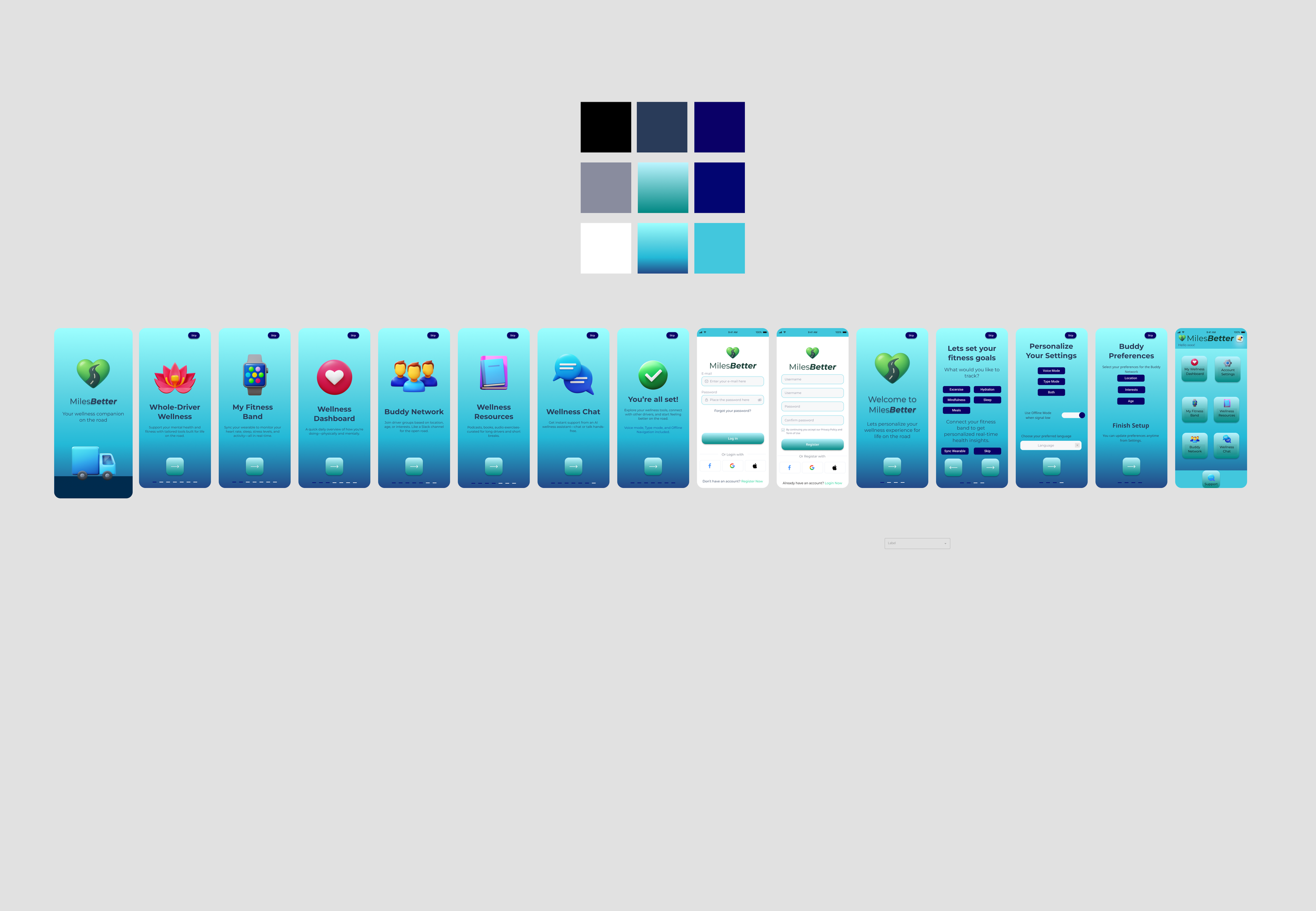
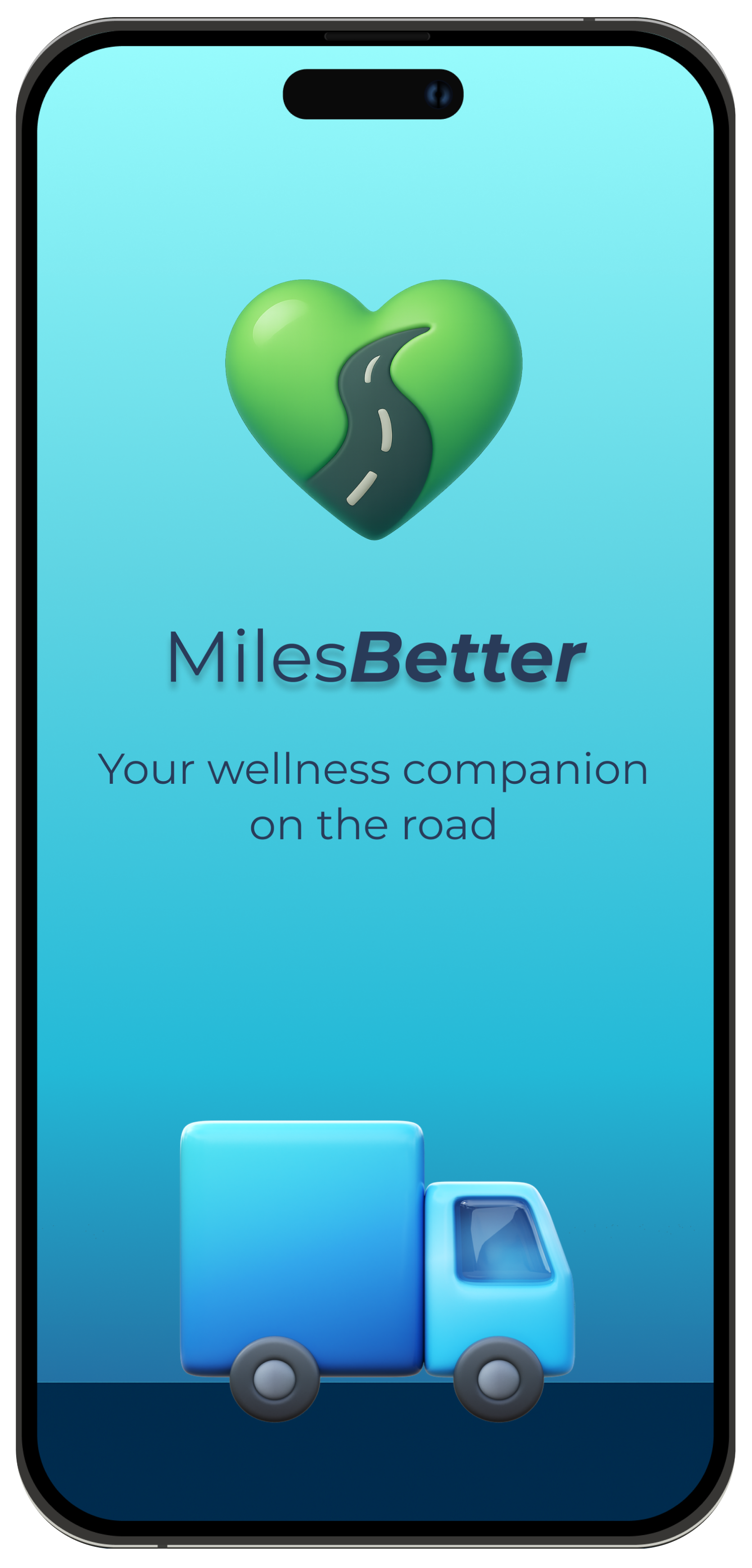
I explored two visual directions: Version 1 focused on clarity, contrast, and minimal distraction — ideal for use on the road, but lacking visual character. Version 2 introduced a more polished and expressive aesthetic, which I preferred personally, but testing showed it felt too lifestyle-focused for the audience. I chose Version 2 for the cover to reflect my visual instincts, but I’d aim for a balanced direction going forward — one that preserves the legibility of Version 1 while injecting just enough personality to build engagement and brand identity.
I'm also excited by the long-term potential of developing the larger all-in-one HGV app, though currently beyond scope, it's a concept I'd love to revisit and expand in future iterations.
This project deepened my understanding of inclusive, needs-based UX and strengthened my ability to balance visual storytelling with real-world function